Prime Minister Clarifies Stance on Secularism and Federalism to Madhesh Leaders
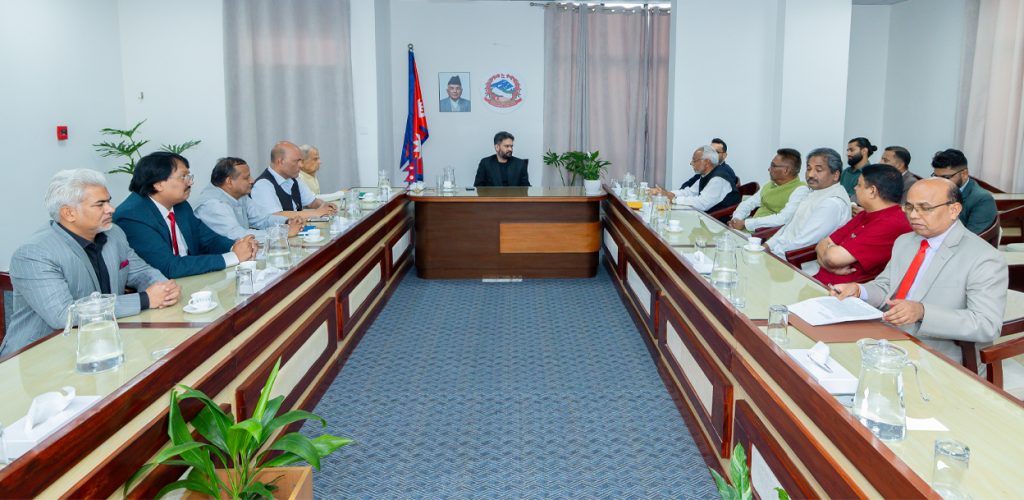
Prime Minister Balen Shah held a two-and-a-half-hour meeting on Friday with leaders from Madhesh-centric political parties in Singha Durbar. During the discussion, party leaders presented their views and specifically sought clarification from the Prime Minister regarding his stance on federalism and commitment to secularism. This inquiry comes in the context of ongoing communal tensions in the Terai-Madhesh region and recent political developments, including a presentation by Dr. Swarnim Wagle, Vice Chairman of Rastriya Swatantra Party (RSP), at the party's general convention in Chitwan. The leaders' concerns also touch upon the broader implications for the Madhesi community and their political representation within the current federal structure. The Prime Minister's clarification aimed to address these sensitive issues and reassure the Madhesh-based parties about the government's commitment to constitutional principles. The meeting underscored the importance of dialogue between the central government and regional parties to maintain national unity and address specific community grievances. The discussions highlighted the complex interplay of identity politics, constitutional governance, and regional aspirations in Nepal.
The meeting between Prime Minister Balen Shah and Madhesh-centric party leaders highlights the persistent challenges in Nepal's federal and secular governance framework. The leaders' focus on federalism and secularism reflects ongoing concerns about the implementation and integrity of these constitutional principles, particularly in regions with distinct ethnic and cultural identities. The Prime Minister's clarification suggests an effort to reassure these parties and manage potential political instability stemming from perceived threats to these foundational aspects of the state. This interaction underscores the delicate balance required to integrate diverse regional aspirations within a unified national structure, a challenge that will continue to shape Nepal's political landscape over the next decade as the nation navigates evolving social dynamics and the complexities of inclusive governance.
AI-generated to prompt reflection — not editorial opinion, not advice, not a statement of fact. How this works.