Professor Assaulted on São Paulo Metro, Cites Homophobia and Lack of Help
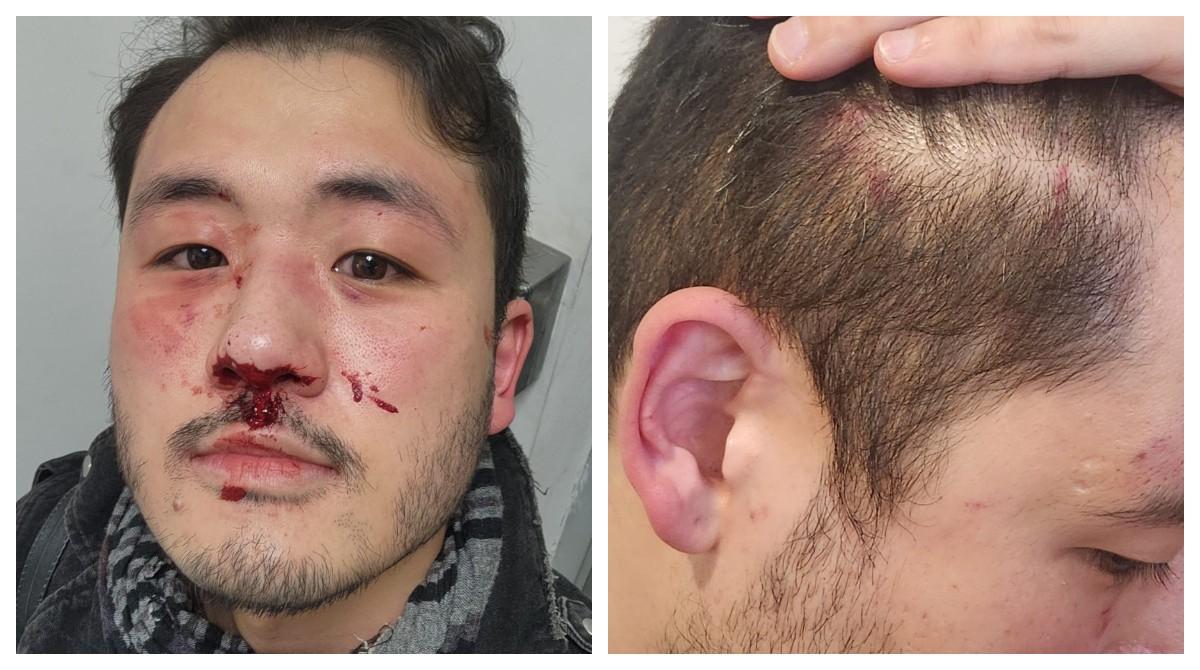
Ricardo Akira Matsufuji, a 29-year-old professor, was violently assaulted on São Paulo's Line 5-Lilás metro on the morning of Saturday, November 11th. He recounted to g1 that during the attack, which lasted several minutes, he repeatedly cried out for help, but neither fellow passengers nor metro employees intervened. Assistance was only provided after he managed to escape his assailant. The attack occurred as Matsufuji was on his way to work, when a passenger began shouting homophobic slurs and accusing him of filming him inside the train car. Matsufuji stated that a group of people observed the incident from a distance, but no one offered aid. The aggressor allegedly kicked him, pushed him to the ground as he tried to disembark, and then proceeded to punch him, slam his head against the floor, and throw him against station walls. The professor sustained cuts and bruises to his face and head, a perforated eardrum, and a fracture, in addition to psychological trauma and fear of encountering his attacker again. He managed to escape towards an escalator, where witnesses finally pointed out the aggressor's homophobic behavior. Metro security reportedly arrived only after the assault concluded, taking both parties to separate rooms before escorting them to a UPA (Urgent Care Unit) and the 27th Police District. Matsufuji expressed dissatisfaction with the medical examination at the UPA and noted that the aggressor was released from the police station before he could provide a full statement. He intends to file a criminal complaint, as police initially refused to register the incident as homophobia, labeling it a mutual altercation due to the aggressor's minor injuries. Motiva, the metro concessionaire, stated they are investigating a passenger dispute and are available to assist authorities, advising passengers to use intercoms for immediate support. The Public Security Secretariat (SSP) confirmed the case was initially registered as bodily injury and forwarded to the Metropolitan Police, noting that the classification could change if new evidence emerges.
This incident highlights critical systemic failures within public transportation safety and law enforcement response. The professor's account suggests a breakdown in bystander intervention and a delayed or inadequate response from metro security and medical personnel, compounded by an initial reluctance from police to classify the assault as a hate crime. The aggressor's alleged homophobic motive, coupled with the lack of immediate support and the initial misclassification of the incident, raises questions about the effectiveness of current protocols for addressing hate-motivated violence and ensuring victim safety. Future considerations should focus on enhancing passenger safety through proactive security measures, fostering a culture of civic responsibility to encourage bystander intervention, and ensuring law enforcement agencies are equipped and mandated to thoroughly investigate and appropriately classify hate crimes, thereby deterring future occurrences and providing justice for victims.
AI-generated to prompt reflection — not editorial opinion, not advice, not a statement of fact. How this works.