Professor Sees 'Farmar Aura' Championship as Youth Expression
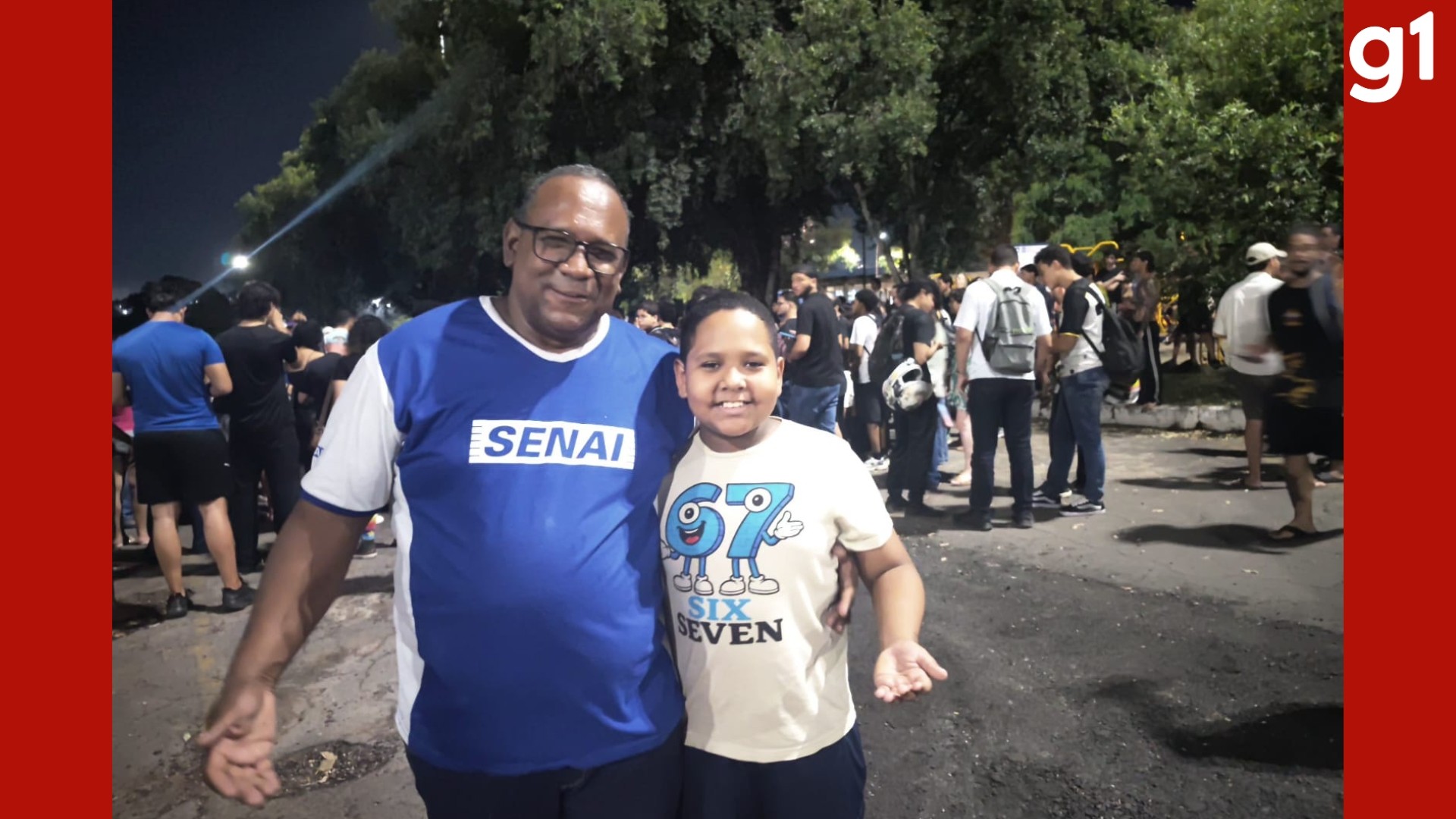
A 'Farmar Aura' championship, previously denied a venue by Mayor Abilio Brunini (PL), took place on Friday, May 24th, in Cuiabá. The event was held in the parking lot of the Federal University of Mato Grosso's (UFMT) University Restaurant (RU). Among the participants was 10-year-old student Abner Benevides dos Santos, accompanied by his father, Oseias dos Santos, a Geoprocessing professor at the Federal Institute of Mato Grosso (IFMT). Professor Santos views the competition as a form of expression for the new generation, distinct from his own childhood experiences. Abner expressed confidence in winning, stating that gaining 'more aura' equates to earning respect and being perceived as strong. He believes participating is an opportunity to achieve this. Professor Santos attended to understand the younger generation's world, seeing 'aura' as more than just an internet meme, but a unique communication style reflecting joy and a modern lifestyle. He suggested it's a way for youth to articulate themselves amidst contemporary realities, often communicating through games and internet references rather than direct speech. Young adults Yasmim Gabrielle dos Santos, Lyann Passos de Souza (both 19), and Daniel Ronny Lima Moura (23) attended to support the event, emphasizing the right of youth to occupy public spaces. They defined 'farming aura' as charisma and stage presence, a way to captivate others. They see the event as a judgment-free zone for self-expression and a social gathering. The group also commented on the city's decision to block the event at Parque das Águas, arguing that such gatherings are harmless and youth have a right to utilize public spaces, questioning the necessity of the controversy.
The 'Farmar Aura' championship highlights evolving youth communication and social interaction paradigms in the digital age. The term 'farmar,' originating from gaming, signifies repetitive tasks for accumulation, now metaphorically applied to building social capital or 'aura.' This phenomenon reflects a generational shift where digital culture influences real-world social dynamics, with participants seeking validation and connection through shared online vernacular. The controversy surrounding venue denial underscores a broader societal tension between traditional public space governance and the emergent need for youth-centric, digitally-influenced social activities. Future urban planning and community engagement strategies may need to accommodate these evolving forms of expression to foster inclusivity and prevent alienation, recognizing that digital fluency often translates into distinct social currencies and interaction styles.
AI-generated to prompt reflection — not editorial opinion, not advice, not a statement of fact. How this works.