Programmable Material Can Steer Heat and Retain State Without Power
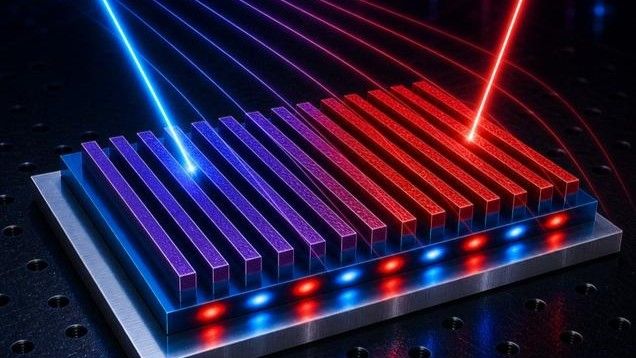
Researchers have developed a novel programmable thermal material capable of directing heat flow and remembering its state even without a continuous power supply. This significant breakthrough holds potential applications in advanced technological fields. The material's ability to manage heat is particularly promising for the cooling of artificial intelligence (AI) chips, which generate substantial amounts of thermal energy. Furthermore, it could enhance the performance and efficiency of silicon photonics devices, which are crucial for high-speed data transmission. The material's unique properties may also find utility in the development of improved infrared devices. This innovation represents a step forward in materials science, offering new possibilities for thermal management in power-sensitive applications.
This development in programmable thermal materials addresses a critical bottleneck in high-performance computing, particularly for AI accelerators. The ability to passively steer heat and maintain state without power suggests a pathway toward more energy-efficient and scalable thermal management solutions. As computational demands increase, particularly with the rise of AI, passive thermal control mechanisms will become increasingly vital to avoid overheating and maintain operational integrity. This innovation could reduce reliance on active cooling systems, thereby lowering energy consumption and manufacturing costs in the long term. Future research may explore integrating these materials into chip designs to optimize heat dissipation at the source, potentially enabling denser and more powerful processing units.
AI-generated to prompt reflection — not editorial opinion, not advice, not a statement of fact. How this works.