Prosecution Rejects Charge Sheet in Gul Plaza Fire Case, Citing Missing Judicial Report
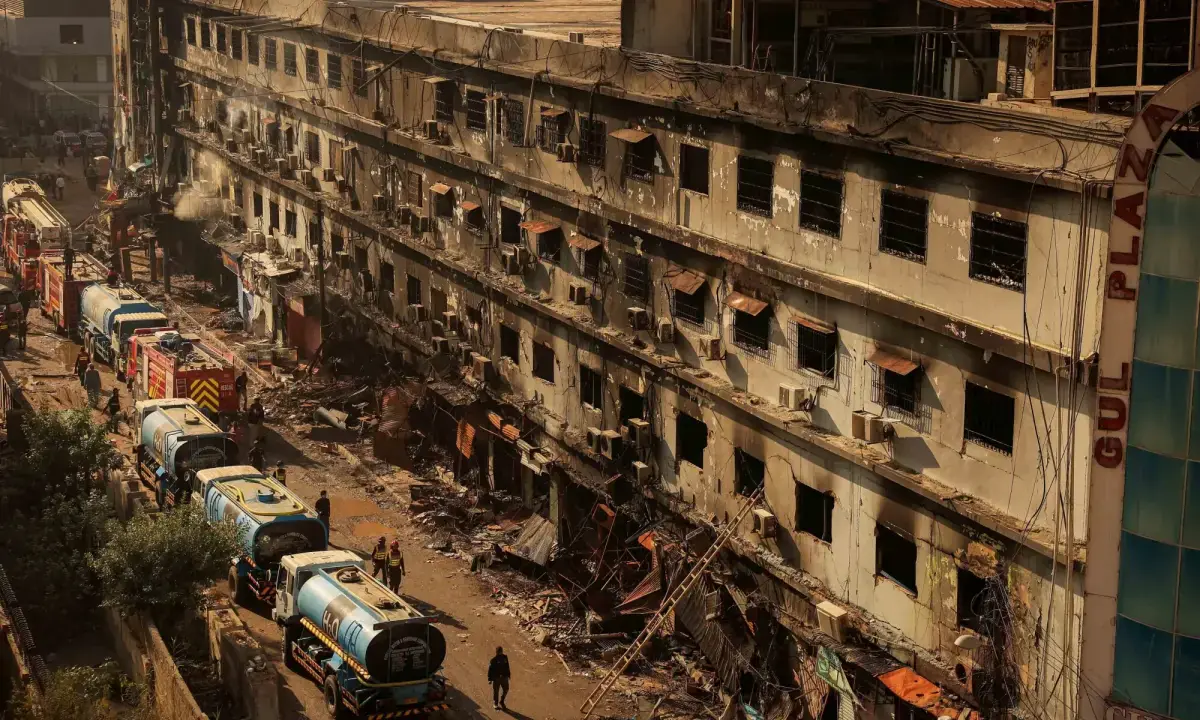
The prosecution has returned the charge sheet for the third time in the Gul Plaza fire case, citing the investigating officer's (IO) failure to include a judicial commission's report and rectify previously identified defects. The charge sheet, which initially named four union officials and the owner of an artificial flower shop along with his teenage son as absconders, faces scrutiny for its omissions. The IO has been directed to resubmit the report after incorporating findings from the Justice Agha Faisal-led judicial commission and addressing identified flaws.
Despite six months passing, the IO has not adequately explained the delay or justified the exclusion of officials from regulatory departments and former union leaders allegedly involved in unauthorized construction. Crucially, the report omits findings from a joint investigation team and the judicial commission, and lacks essential reports from bodies like the Sindh Building Control Authority. The prosecution also noted that criminal liability was generalized rather than assigned to specific suspects.
While a forensic report indicated no explosive substances were found, the charge sheet suggests the fire originated from negligence at an artificial flower shop, where an 11-year-old boy, Huzaifa, was allegedly playing with matches. The Gul Plaza reportedly lacked fire safety equipment, and union officials failed to contact rescue services or prevent the minor from operating the shop alone. The disconnection of electricity by K-Electric, coupled with closed gates, trapped victims inside. The devastating fire resulted in 72 fatalities, eight injuries, and the complete destruction of the plaza, with 64 bodies identified and returned to their families. A manslaughter case was initially registered against unknown individuals.
The repeated rejection of the charge sheet in the Gul Plaza fire case highlights significant procedural and investigative shortcomings. The prosecution's insistence on including the judicial commission's report and addressing defects points to a need for a comprehensive and legally sound case, rather than a rushed submission. The IO's failure to identify all responsible parties, including potentially negligent regulatory officials and past union leadership, suggests a systemic issue in accountability for unauthorized construction and safety oversights. The incident underscores the critical importance of robust fire safety regulations, emergency preparedness, and clear lines of responsibility in densely populated commercial spaces. Future prevention will likely require enhanced oversight of building permits, mandatory fire safety audits, and swift enforcement actions to mitigate risks associated with negligence and structural integrity, particularly in the context of rapid urbanization and evolving safety standards.
AI-generated to prompt reflection — not editorial opinion, not advice, not a statement of fact. How this works.