Prosecutor Calls Dual BRT Systems in Belém 'Absurd' and Wasteful
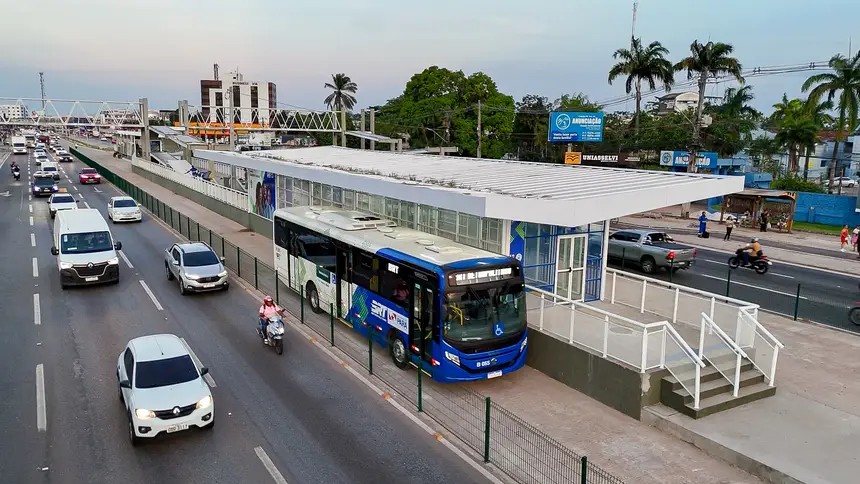
A public prosecutor in Belém, Pará, Brazil, has strongly criticized the operation of two separate Bus Rapid Transit (BRT) systems within the metropolitan area, labeling the situation "absurd" and "esdrúxulo" (bizarre). Marco Aurélio Nascimento, from the State Public Prosecutor's Office (MPPA), stated that the existence of two non-integrated BRT administrations—one municipal and one state-run—directly harms the public and constitutes a waste of public funds. The MPPA has proposed a Conduct Adjustment Agreement (TAC) to mandate the full integration of the Belém BRT and the Metropolitan BRT, giving the state and municipal governments 20 days to respond. Nascimento highlighted that other major cities operate with a single BRT system, and the current incompatibility in Belém penalizes commuters. This is not the first time the MPPA has raised concerns; in May 2025, it recommended transferring BRT management from the municipality to the state, a suggestion that was not adopted. The Metropolitan BRT began operations in November 2025 without integration with the municipal system. The prosecutor emphasized that billions have been spent on these separate infrastructures, including federal funding via Caixa Econômica, leading to unnecessary duplication of maintenance costs and overlapping routes. He believes a unified system with a single fare and coordinated lines would provide better service quality. The MPPA advocates for state and municipal authorities to meet and align the transportation management under the proposed TAC. Nascimento pointed out that the original BRT project, dating back to 1991 studies with Japan's JICA, envisioned a unified system, but a divergence in 2012 led to the current parallel development of two systems.
The dual administration of Belém's BRT systems presents a clear case of governance fragmentation leading to operational inefficiencies and public dissatisfaction. From a systems perspective, the lack of integration, despite significant public investment, suggests a failure in strategic planning and inter-agency coordination. The prosecutor's critique points to a potential misalignment of incentives between municipal and state authorities, where separate project development may have taken precedence over unified public service delivery. Looking ahead, the imperative for integrated urban mobility solutions, especially in the context of increasing urbanization and the need for sustainable transport, underscores the systemic contradiction. Future policy should focus on establishing robust frameworks for metropolitan-wide transport planning and oversight, ensuring that infrastructure projects are designed and operated with a singular focus on user benefit and fiscal responsibility, rather than serving as vehicles for separate jurisdictional agendas.
AI-generated to prompt reflection — not editorial opinion, not advice, not a statement of fact. How this works.