Protected Beavers Cause Millions in Damage, Prompting Costly Mitigation Efforts
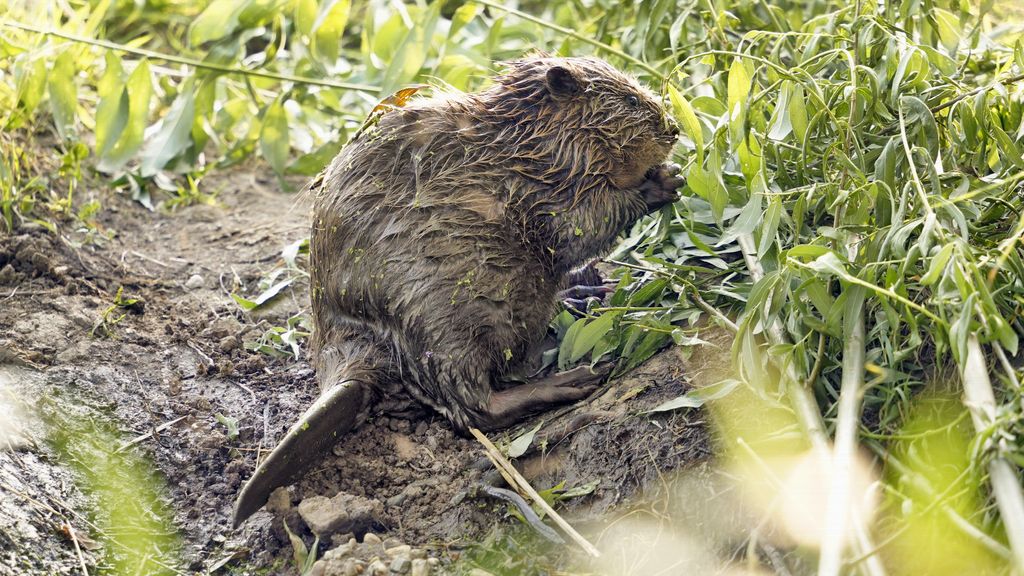
The reintroduction of beavers in the Netherlands in the late 1980s, initially a conservation success story, has evolved into a significant challenge. Beavers, once absent for 150 years, have thrived to the extent that their natural behaviors of gnawing and burrowing now pose a threat to crucial infrastructure like dikes and roads. This has necessitated extensive repair work and preventative measures, leading to rapidly escalating costs for water boards. In 2019, the 21 water boards collectively spent 500,000 euros on beaver-related damage, a figure that surged to 4.5 million euros annually by last year, with expectations of further increases. Water board officials are actively monitoring for new burrows and lodges that destabilize dikes, roads, and railway lines, noting that making thousands of kilometers of dikes beaver-proof is prohibitively expensive. A newly established Knowledge Center Beaver, involving entities like Rijkswaterstaat and ProRail, is seeking a unified approach, emphasizing the need to understand beaver behavior while acknowledging the urgent risks. Individual homeowners are also experiencing severe structural damage to their properties, with one resident facing repair costs of up to 100,000 euros and a pending insurance claim. In cases where beavers pose a significant danger, provincial authorities can issue permits for culling. This has become increasingly common, particularly in Limburg, where the number of beavers culled rose from 19 in 2019 to 180 in 2024, prompting provincial officials to assess the current beaver population and the province's carrying capacity. Relocation efforts have proven insufficient, as other provinces show no willingness to accept beavers from Limburg.
The Dutch beaver reintroduction program, initially a triumph of conservation, now highlights the complex interplay between ecological goals and infrastructural realities. As a protected species, the beaver's population growth necessitates a re-evaluation of coexistence strategies, particularly concerning the significant financial burden of damage mitigation and repair. The escalating costs underscore a systemic challenge: balancing biodiversity preservation with the maintenance of essential public infrastructure. Future planning must consider the long-term economic implications of species recovery, potentially exploring innovative engineering solutions for infrastructure resilience or more dynamic habitat management approaches that account for the species' expanding range and impact. The situation in Limburg, with its high culling rates and lack of relocation options, suggests a need for proactive, multi-provincial strategies to manage population distribution and associated costs before they become unmanageable elsewhere.
AI-generated to prompt reflection — not editorial opinion, not advice, not a statement of fact. How this works.