Protest Erupts in Biddeford After ICE Agent Fatally Shoots Colombian Migrant
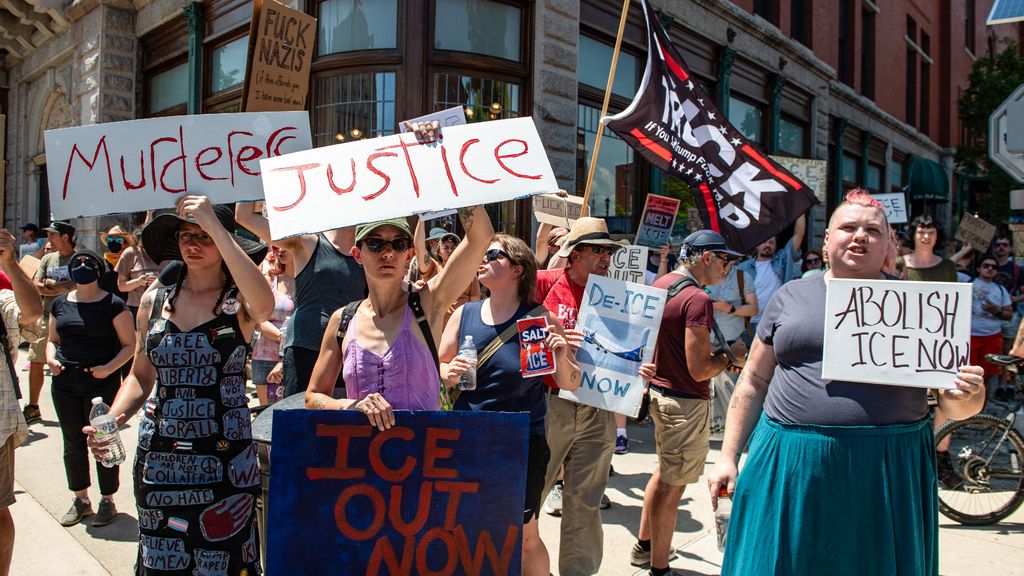
Residents of Biddeford, Maine, took to the streets to protest the presence of Immigration and Customs Enforcement (ICE) following the fatal shooting of a 26-year-old Colombian migrant by an ICE agent on Monday morning. Authorities claim the migrant attempted to evade a check and used his vehicle as a weapon, prompting the agent to fire out of fear for public safety. However, evidence supporting these claims is currently lacking, as the involved agents were not equipped with body cameras. The agent who discharged the firearm has been placed on administrative leave. Emergency services were called after the man was shot in his car, and he later died from his injuries. A Maine senator indicated that the deceased migrant was not the individual ICE agents were initially seeking, contradicting earlier official statements that the man had been ordered to leave the U.S. Maine Governor Janet Mills condemned what she termed ICE's "reckless and arbitrary manner" of conducting enforcement operations. Approximately 200 protesters gathered, with one expressing shame and shock at the agency's actions, stating that ICE "should not be murdering people on the streets in the U.S." Leaders of migrant organizations voiced anger, questioning how much more suffering communities must endure before authorities acknowledge the severity of the issue. This incident marks the second time in a short period that an ICE agent has fatally shot a migrant in a vehicle, following a similar event in Texas the previous week. It is the tenth such fatality involving ICE since the current U.S. presidential term began.
This event highlights critical tensions between immigration enforcement objectives and public safety concerns, particularly in the context of undocumented individuals attempting to evade law enforcement. The lack of body camera footage and conflicting official statements raise significant questions about the proportionality of force used and the adherence to established protocols. The incident underscores the broader debate surrounding the tactics employed by ICE and the potential for escalation during routine checks, especially when individuals perceive their freedom to be at immediate risk. Future considerations for ICE operations may involve enhanced de-escalation training, mandatory body camera usage, and clearer guidelines on vehicle pursuits and use-of-force policies to mitigate such tragic outcomes and rebuild public trust. The recurrence of fatal shootings involving vehicles suggests a systemic issue that warrants a review of operational procedures and accountability mechanisms within the agency.
AI-generated to prompt reflection — not editorial opinion, not advice, not a statement of fact. How this works.