Protesters Demand 'Death to Khamenei's Killers' at Tehran Funeral
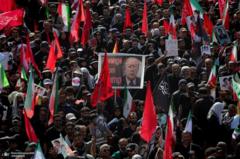
The official funeral procession for the former leader of the Islamic Republic in central Tehran was marked by significant disruptions and disorganization, causing confusion for thousands of attendees. Protesters chanted slogans against Masoud Pezeshkian and Abbas Araghchi, as well as negotiators involved in talks with the United States. Images circulated online showed people throwing stones at a picture of Donald Trump and demanding the "killing of the killers" of Ali Khamenei. These incidents occurred during the state-organized ceremony, which was prepared with extensive government coordination. In parallel, Donald Trump reiterated threats against Iran, stating he would "finish the job" if a deal was not reached. In response, Iran's Supreme National Security Council Secretary warned the U.S. President to address the Iranian people respectfully, or face a different form of response.
The funeral ceremony in Tehran, intended as a state-sanctioned event, unexpectedly became a focal point for public dissent, highlighting internal political tensions and external pressures. The convergence of anti-government chants, symbolic acts of aggression towards a former U.S. president, and demands for retribution against perceived enemies of the supreme leader suggests a complex interplay of domestic grievances and geopolitical anxieties. The Iranian government's response to U.S. threats, while framed as a nationalistic stance, also serves to rally domestic support amidst potential instability. This event underscores the challenges of managing public sentiment during periods of political transition and international negotiation, where state-controlled narratives can be challenged by spontaneous expressions of discontent.
AI-generated to prompt reflection — not editorial opinion, not advice, not a statement of fact. How this works.