Protesters Demand End to Caste Discrimination in Kathmandu
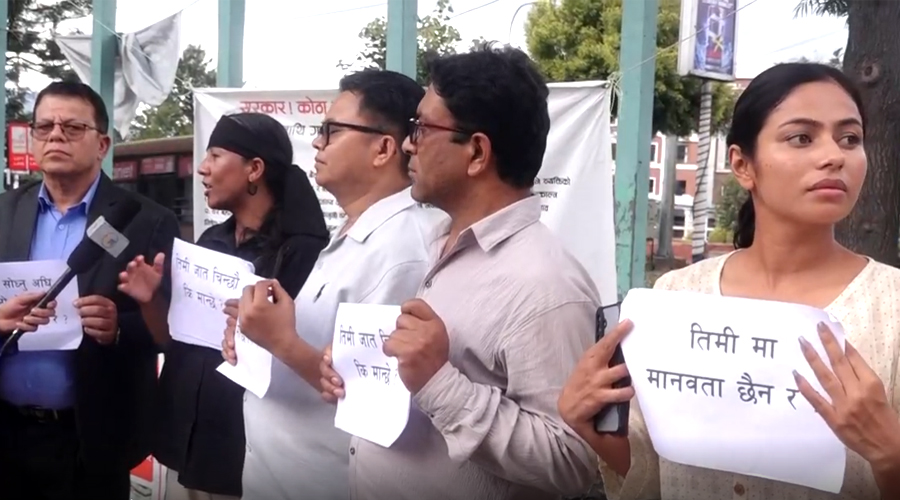
An anti-caste discrimination campaign organized a protest in Kathmandu, Nepal, demanding the permanent eradication of caste-based discrimination. Demonstrators gathered at Maitighar, a public square often used for protests, to voice their grievances. The campaign's core message centers on the need to abolish the practice of untouchability and ensure equal rights for all citizens, regardless of their caste. The protest highlights the ongoing struggle against deeply entrenched social hierarchies that continue to marginalize certain communities. Participants called for stronger legal enforcement and societal change to dismantle the system of caste. The demonstration aimed to raise public awareness and pressure the government to take decisive action. The organizers emphasized that true equality can only be achieved when caste-based discrimination is completely eliminated from society. This action underscores the persistent challenges faced by marginalized groups in their pursuit of justice and dignity. The protest signifies a continued effort to challenge historical injustices and advocate for a more equitable future.
The protest in Kathmandu highlights the persistent societal challenge of caste discrimination, a system with deep historical roots. While legal frameworks may exist to prohibit such practices, their effective enforcement and societal acceptance remain critical factors. The demonstrators' call for a permanent end to discrimination points to a desire for systemic change that goes beyond legislation, encompassing cultural attitudes and ingrained biases. Future progress will likely depend on a multi-pronged approach involving continued public advocacy, robust legal mechanisms, and educational initiatives aimed at fostering a culture of equality and respect across all societal strata. Addressing these deeply embedded social structures requires sustained effort and a commitment to dismantling the underlying power dynamics that perpetuate inequality.
AI-generated to prompt reflection — not editorial opinion, not advice, not a statement of fact. How this works.