Protests Erupt Against AfD Party Conference in Erfurt; Police Intervene
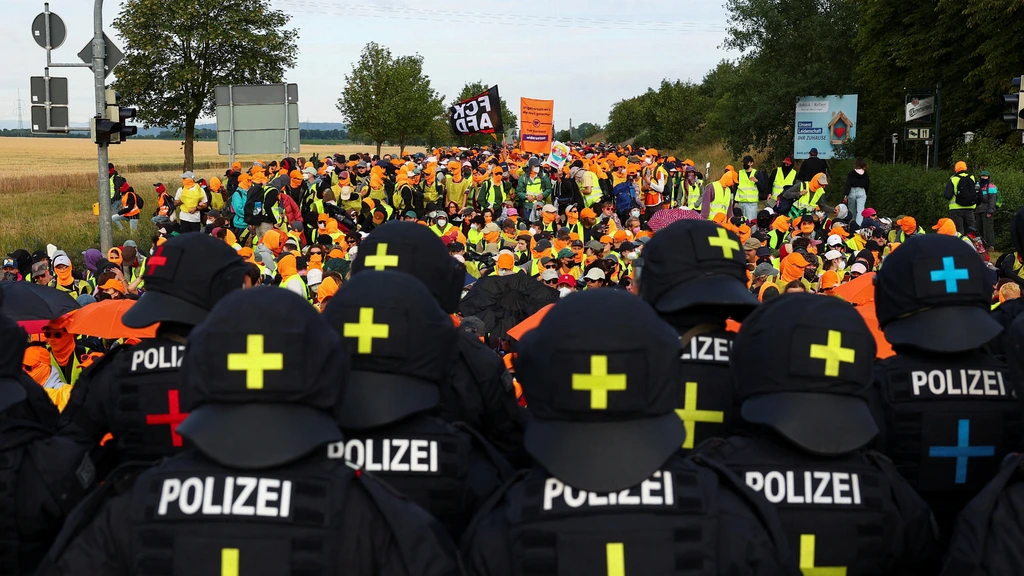
German police intervened early this morning in Erfurt amidst large-scale protests against the Alternative for Germany (AfD) party conference. Thousands are demonstrating against fascism and xenophobia, aiming to disrupt access for AfD supporters. Groups blocked the A71 highway and B7 federal road, impeding access to the city, with police struggling to clear the roads due to the large number of protesters. Other demonstrators engaged in sit-ins, with some gluing themselves to tram tracks, partially disrupting public transport in Erfurt. The protest organizers reported that 250 buses from sixty German and Austrian cities brought supporters, and police anticipate up to 50,000 peaceful protesters, alongside approximately 2,500 activists prepared to use violence. Confrontations occurred at the local AfD party office when it was vandalized and fireworks were set off, prompting police intervention with batons and pepper spray against protesters who broke through a cordon. Despite the protests, most AfD delegates, 540 out of 600, had arrived at the conference venue before 8:00 AM for the 10:00 AM start. The conference aims to re-elect leaders Alice Weidel and Tino Chrupalla ahead of crucial state elections later this year. The AfD, which became Germany's largest opposition party with 20% of the vote in last year's federal elections, hopes to capitalize on public dissatisfaction with the current government. The party anticipates strong results in upcoming state elections in Saxony-Anhalt and Mecklenburg-Western Pomerania, potentially leading to the election of its first governor and challenging the political 'firewall' maintained by other parties.
The events in Erfurt highlight the intense societal divisions surrounding the AfD's political trajectory in Germany. Protesters' tactics, including road blockades and direct action at party offices, reflect a deep-seated opposition driven by concerns over the party's ideology and its potential influence on national and regional governance. The AfD's strategic positioning, aiming to leverage public discontent for electoral gains in upcoming state elections, presents a significant challenge to established political norms, particularly the 'firewall' strategy employed by other parties. This situation underscores a broader trend of political polarization across Europe, where parties perceived as populist or far-right are increasingly testing the boundaries of mainstream political discourse and coalition-building. The effectiveness of protest actions in influencing political outcomes, alongside the AfD's electoral strategy, will be critical factors shaping Germany's political landscape over the next decade, potentially impacting democratic institutions and social cohesion.
AI-generated to prompt reflection — not editorial opinion, not advice, not a statement of fact. How this works.