Protests Erupt in Kyiv and Other Cities Supporting Mykhailo Fedeorov's Return as Defense Minister
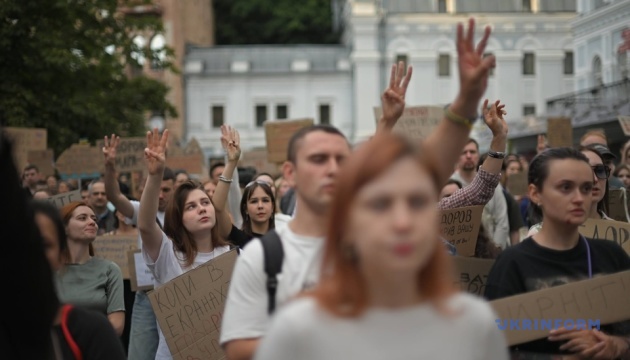
Demonstrations are taking place in Kyiv and various other cities across Ukraine, advocating for the reinstatement of Mykhailo Fedeorov to his former position as the Minister of Defense. The protests express strong support for Fedeorov and call for his return to lead the Ministry of Defense. These gatherings aim to influence public opinion and potentially policy decisions regarding the leadership of Ukraine's defense sector. The specific demands center on Fedeorov's past performance and perceived suitability for the role. The movement highlights a segment of the Ukrainian public actively engaged in political discourse concerning key government appointments. The protests underscore the importance of the defense ministry's leadership during ongoing national challenges. Participants are voicing their desire for continuity and specific leadership qualities they believe Fedeorov embodies. The events reflect a public sentiment seeking specific individuals in critical governmental positions.
The public demonstrations in support of Mykhailo Fedeorov's return as Defense Minister indicate a desire for continuity and specific leadership attributes among a segment of the Ukrainian populace. Such movements can reflect public trust in an individual's past performance or a perceived need for experienced leadership during periods of national security concern. Analyzing these events through a systems lens, it's important to consider the interplay between public sentiment, political appointments, and the functional requirements of a critical government ministry. The effectiveness of such advocacy in influencing governmental decisions often depends on broader political dynamics and the perceived strategic imperatives of the state. Looking ahead, the capacity of governance structures to integrate public input while maintaining strategic coherence in defense policy will be a key factor in national resilience and stability.
AI-generated to prompt reflection — not editorial opinion, not advice, not a statement of fact. How this works.