Protests Erupt in Peru Against President Keiko Fujimori
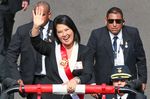
Protests have broken out in Peru, targeting the country's right-wing President Keiko Fujimori. Demonstrators are expressing their opposition to her political stance, which they claim mirrors that of her father. Her father previously governed Peru during the 1990s. The protesters' grievances stem from a perceived ideological continuity between Keiko Fujimori's current administration and her father's past leadership. This sentiment suggests a public concern about the direction of the country under Fujimori's presidency. The protests highlight a significant segment of the population wary of a return to policies associated with the previous decade.
The protests in Peru reflect public apprehension regarding the political direction of President Keiko Fujimori's administration, drawing parallels to her father's 1990s governance. This situation underscores the complex interplay between historical political legacies and contemporary governance in shaping public sentiment. Citizens' concerns may be driven by perceptions of authoritarian tendencies or specific policy frameworks associated with the past, prompting calls for transparency and accountability in current leadership. Future political stability in Peru could hinge on the administration's ability to address these public concerns through inclusive dialogue and demonstrable policy shifts that diverge from historical precedents, thereby fostering trust and ensuring alignment with democratic principles.
AI-generated to prompt reflection — not editorial opinion, not advice, not a statement of fact. How this works.