Proton-Assisted Quantum Effect Enhances Energy Transfer
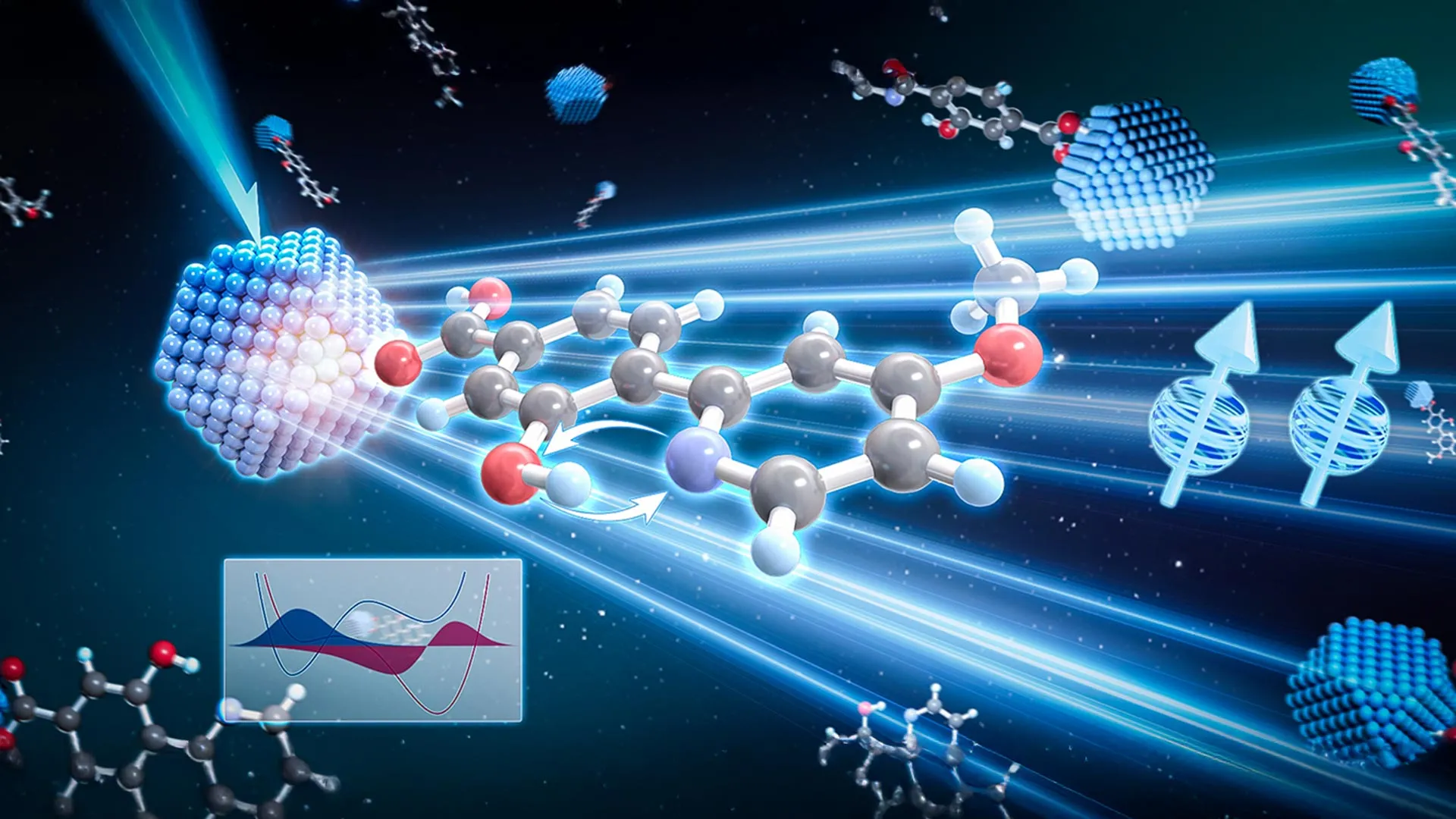
Scientists have identified a novel proton-assisted mechanism that significantly enhances the transfer of triplet energy between quantum dots and adjacent molecules. This process involves a proton temporarily relocating, facilitating the coordinated movement of electrons before returning to its original position. The researchers observed that this quantum-driven shuttle plays a crucial role in optimizing energy transfer efficiency. This discovery holds considerable promise for advancements in various technological applications. Specifically, it could provide a powerful new method for fine-tuning the performance of solar cells, enabling more efficient energy capture. Furthermore, the mechanism may lead to improvements in laser technology, allowing for more precise control over light emission. It also opens avenues for enhancing catalytic reactions, potentially leading to more efficient chemical processes. The ability to manipulate energy transfer at this quantum level represents a significant step forward in materials science and quantum engineering.
This discovery highlights a sophisticated quantum mechanical interaction that could offer significant engineering advantages. By leveraging a proton's transient positional shift to mediate electron coordination, researchers have unveiled a mechanism for highly efficient energy transfer. This finding suggests a pathway for developing next-generation optoelectronic devices and chemical catalysts, where precise control over energy flow is paramount. The challenge will be to scale this effect from the quantum dot level to practical, large-scale applications reliably and cost-effectively. Future research may focus on designing materials and systems that can predictably harness this proton-shuttle phenomenon, potentially revolutionizing energy conversion and storage technologies within the next decade.
AI-generated to prompt reflection — not editorial opinion, not advice, not a statement of fact. How this works.