PT Officially Nominates Jerônimo Rodrigues for Bahia Governor Re-election Bid
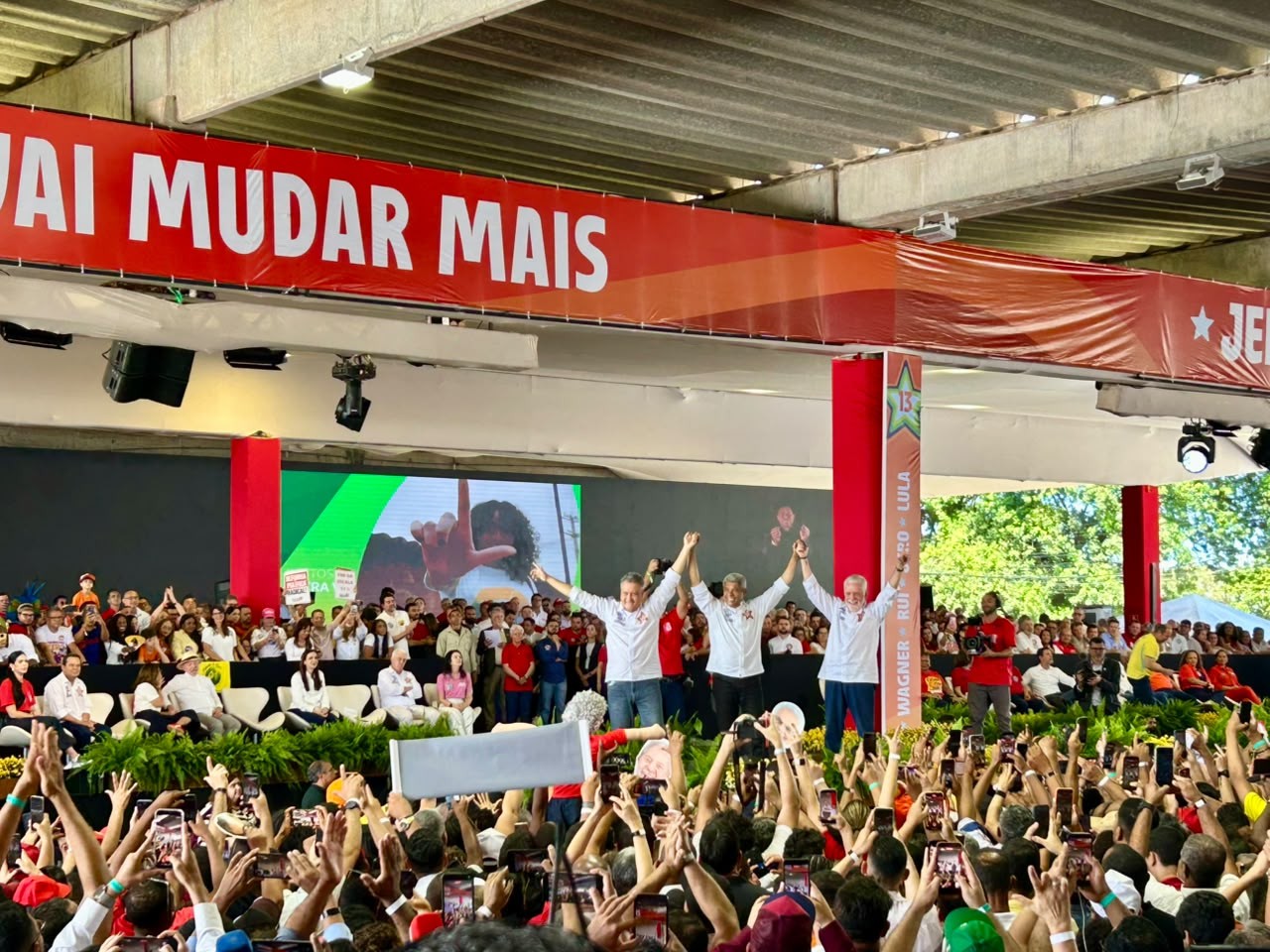
The Workers' Party (PT) has officially nominated Jerônimo Rodrigues as its candidate for governor of Bahia, seeking re-election in 2026. The decision was formalized during the party's convention held on Saturday, July 1st, in Salvador. Rodrigues, the current governor, has an extensive public service record. Previously, he served as National Secretary of Territorial Development under former President Dilma Rousseff and held state-level positions as Secretary of Rural Development and Education in Bahia. The convention also approved other candidacies, including Geraldo Júnior (MDB) for vice-governor, and Jaques Wagner (PT) and Rui Costa (PT) for the Senate. Rodrigues, a 61-year-old agricultural engineer and licensed university professor, began his state government career in 2007. He has held various roles, including advisor in the Secretariat of Science, Technology, and Innovation, and positions within the Secretariat of Planning. In Brasília, he served in the Ministry of Agrarian Development during Dilma Rousseff's administration. He later coordinated the government program for Rui Costa and served as the first head of the newly created Secretariat of Rural Development. Before becoming governor, he led the State Secretariat of Education. Rodrigues emphasized his administration's focus on care, particularly for the elderly, disabled, autistic individuals, and youth, aiming to provide opportunities, employment, and leisure.
The PT's nomination of Jerônimo Rodrigues for re-election highlights the party's strategy of consolidating power through experienced incumbents with established political networks. This approach leverages past performance and continuity to appeal to voters, while also signaling a commitment to specific policy agendas, such as social care and youth opportunities. The endorsement of other key PT figures for Senate seats further solidifies the party's influence within the state's political landscape. From a systemic perspective, this nomination reflects a broader trend in Brazilian politics where established parties often rely on familiar faces to navigate electoral cycles, potentially limiting the space for new political actors and ideas. The upcoming electoral process will test whether this strategy of continuity and established patronage can maintain its effectiveness against evolving voter demands and potential challenges from opposition parties.
AI-generated to prompt reflection — not editorial opinion, not advice, not a statement of fact. How this works.