Public Transport Faces Endless Challenges
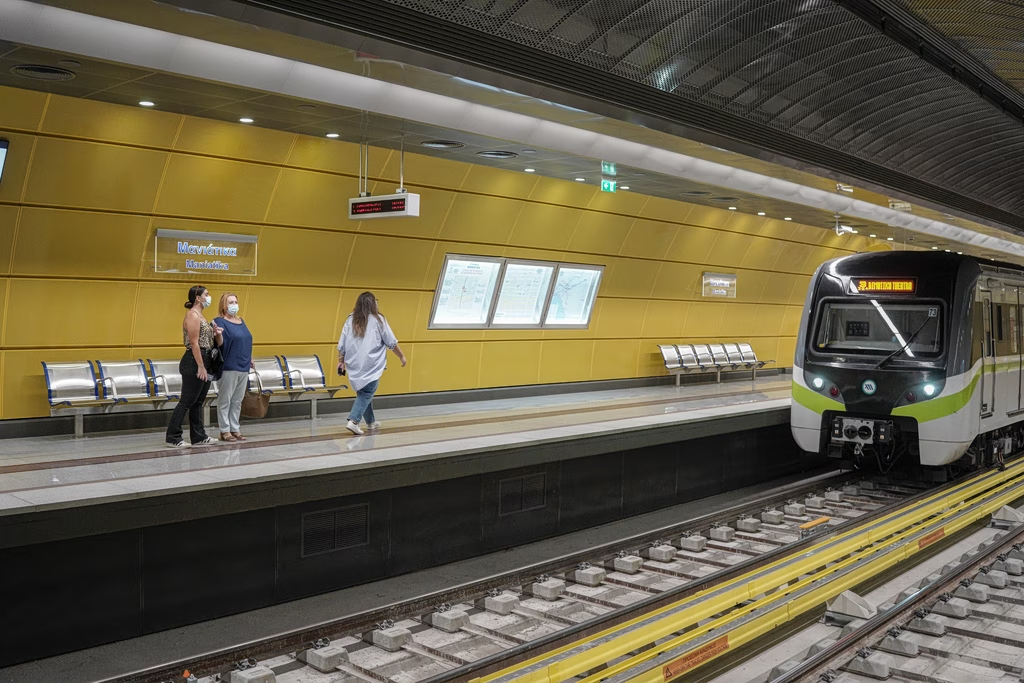
Greece's public transport sector is grappling with persistent and significant challenges, described as a "marathon without an end." The core issues revolve around three major "sick patients" within the system, whose complex problems are difficult to resolve despite numerous announcements and promises of reform. These underlying problems have created a difficult equation for the government and transport authorities attempting to find viable solutions. The sector's struggles indicate a need for deep structural changes rather than superficial fixes. The "difficult equation" suggests that current approaches are insufficient to address the scale of the problems. The ongoing nature of these issues highlights a systemic weakness that requires sustained attention and investment. Without a clear resolution, the "marathon" of public transport challenges is likely to continue impacting citizens and the economy.
The persistent difficulties in Greece's public transport sector, characterized as an "endless marathon," suggest a systemic issue that transcends simple policy announcements. The "three major sick patients" likely represent deeply entrenched problems such as underfunding, aging infrastructure, and inefficient management structures. The "difficult equation" implies that current reform strategies are not adequately addressing the interconnected nature of these problems. Future solutions may require a comprehensive overhaul, focusing on sustainable funding models, technological modernization, and optimized operational efficiencies. Addressing these systemic contradictions is crucial for ensuring reliable and accessible public transportation, which is vital for economic activity and citizen well-being in the coming decade.
AI-generated to prompt reflection — not editorial opinion, not advice, not a statement of fact. How this works.