Puma Appears in Backyard in Rural Goiás, Disrupting Local Life
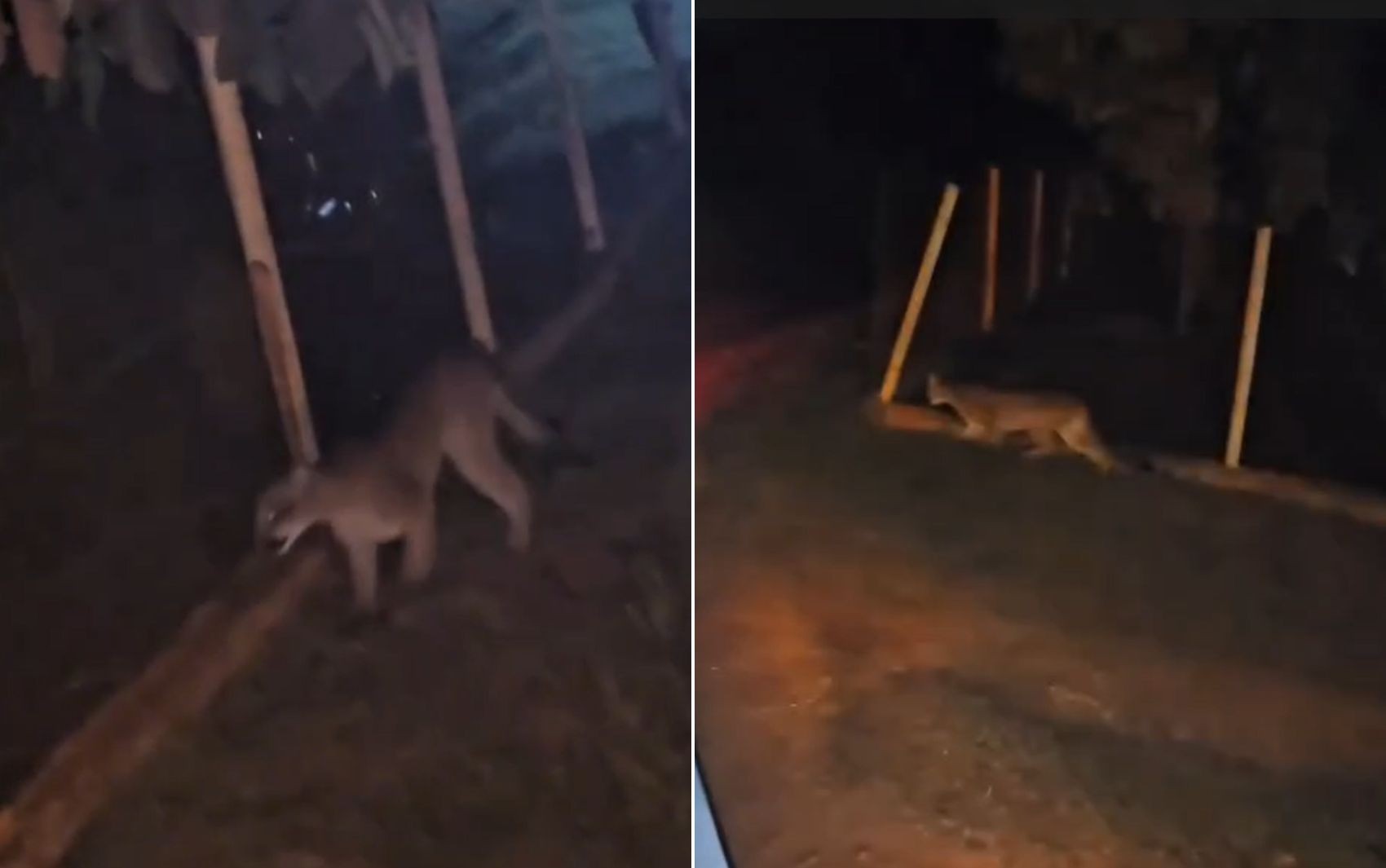
A puma has been filmed in the backyard of a farm in Deuslândia, Brazabrantes, Goiás, causing significant disruption to residents' routines. The video, recorded on June 20, shows the animal appearing distressed as it searches for an exit before fleeing down a dirt road. Local resident Odair Davi Barbosa, who captured the footage, stated that the puma has been frequenting the area for some time, leading to problems such as preying on chickens and even a pet cat. To protect their livestock, residents have been forced to build reinforced chicken coops. Barbosa noted that these encounters are becoming increasingly common, with pumas sometimes seen during daylight hours. Residents contacted the Brazilian Institute of Environment and Renewable Natural Resources (Ibama) for assistance, but the agency reportedly stated that the animals are 'free-living' and their presence is due to nearby permanent preservation areas. The increased puma activity has led residents to alter their daily lives, including ceasing outdoor activities like fishing and hiking after dark. Biologist Edson Abrão identified the animal as a puma (also known as a cougar or mountain lion), the second-largest feline in Latin America, which is carnivorous and primarily nocturnal, feeding on smaller animals like chickens and other mammals. While not currently endangered, the puma population is declining, posing a future extinction risk. Abrão suggested the filmed animal might be a juvenile and emphasized the species' ecological importance, noting that Ibama monitors them and intervenes in risky situations. He also stated there are no known records of fatal attacks on humans by pumas, as they typically only attack in self-defense.
The recurring presence of pumas in residential areas, as documented in Goiás, highlights a common conflict between expanding human settlements and wildlife habitats. While Ibama's stance emphasizes the 'free-living' nature of these animals and their right to occupy natural areas, the practical implications for local residents, including livestock loss and altered daily routines, necessitate a more integrated approach. Future strategies could involve enhanced landscape planning that creates wildlife corridors, improved community-based early warning systems, and educational programs that foster coexistence rather than fear. Addressing the root causes of habitat encroachment and understanding the specific ecological pressures driving these animals closer to human populations will be crucial for sustainable solutions in the coming decade, balancing conservation goals with public safety and economic realities.
AI-generated to prompt reflection — not editorial opinion, not advice, not a statement of fact. How this works.