Puma Attempts to Attack Sheep on Rural Property in São Paulo, Brazil
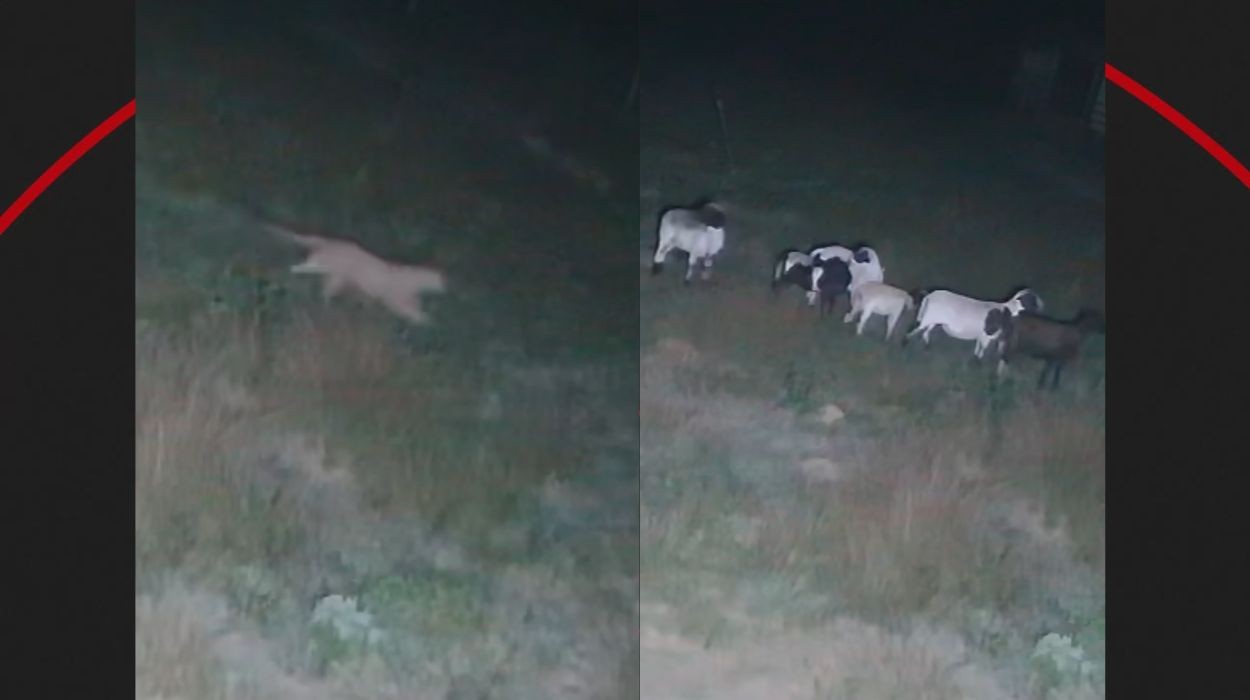
A puma was captured on a surveillance camera attempting to prey on a flock of sheep at a rural property in Horto de Camaquã, located between Rio Claro and Ipeúna in São Paulo state, Brazil. The incident occurred earlier this month, with footage released on Wednesday, November 22nd, by the Rural Union of Rio Claro. The video shows the big cat approaching the sheep at night before ultimately abandoning the attempt and fleeing the scene. The Rural Union noted that chickens have previously gone missing from the same property, leading owners to suspect prior attacks by the same feline. Biologist Hugo Saulino explained that the presence of pumas on rural properties is linked to food availability and habitat loss due to urban expansion and agricultural deforestation. He highlighted that confined animal enclosures, particularly poultry farms, attract these predators, serving as an easy food source for large carnivores like the Puma concolor. Saulino advised that if a puma is sighted, people should not attempt to capture or scare it away but instead contact responsible environmental agencies. For animals found cornered in urban areas, environmental departments and fire departments can assist with rescue and rehabilitation. He also emphasized the role of rural property owners in prevention, suggesting that implementing proper management practices for confined animal husbandry can reduce encounters and minimize losses.
This incident highlights the ongoing conflict between wildlife and human encroachment on natural habitats. The puma's attempt to prey on livestock is a predictable behavior driven by ecological pressures, including habitat fragmentation and reduced natural prey populations. The increasing proximity of wildlife to agricultural areas underscores the need for integrated land-use planning that balances conservation goals with agricultural productivity. Effective strategies should focus on habitat restoration, creating wildlife corridors, and implementing robust biosecurity measures for livestock, rather than solely relying on reactive responses after an incident. Understanding the incentive structures driving animal behavior in human-altered landscapes is crucial for developing sustainable coexistence strategies that mitigate human-wildlife conflict over the next decade.
AI-generated to prompt reflection — not editorial opinion, not advice, not a statement of fact. How this works.