Punjab CM and Assembly Speaker Discuss Legislative Process and Reforms
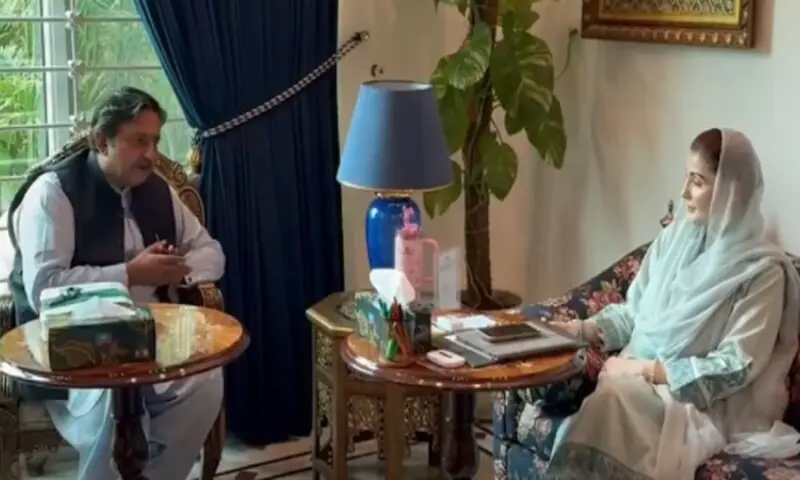
Punjab Chief Minister Maryam Nawaz and Punjab Assembly Speaker Malik Muhammad Ahmad Khan held their second private meeting in a week to discuss legislative matters. During their discussion on Wednesday, Chief Minister Nawaz emphasized the importance of "inclusive legislation," stressing that both government and opposition members should be consulted during the law-making process. Speaker Khan assured the Chief Minister that her directive would be followed and that the Punjab Assembly's proceedings would be conducted through mutual coordination. The two leaders also reviewed legislative issues pertaining to prison reforms and a contentious bill known as the Punjab Control of Habitual Offenders and Anti-Social Behaviour Bill, 2026. Speaker Khan commended Chief Minister Nawaz for her policy presentation at the National Paigham-i-Aman Committee and for launching the "Apna Khet, Apna Rozgar" scheme. Chief Minister Nawaz described the "Apna Khet, Apna Rozgar" initiative as a collective achievement and highlighted the Punjab government's ongoing commitment to introducing new public welfare projects. She noted that the government is now prioritizing underdeveloped regions, introducing electric buses, and modern agricultural machinery to enhance the farming sector.
This meeting between the Chief Minister and the Assembly Speaker highlights the ongoing efforts to establish a collaborative legislative environment in Punjab. The emphasis on inclusive legislation and mutual coordination suggests an awareness of the need for broader consensus-building, which can lead to more sustainable policy outcomes. The discussion of specific bills, such as the Punjab Control of Habitual Offenders and Anti-Social Behaviour Bill, 2026, indicates a focus on addressing societal challenges through legislative means. The Chief Minister's remarks on public welfare projects and development in underserved areas, coupled with initiatives like "Apna Khet, Apna Rozgar," point to a governance strategy aimed at economic uplift and equitable growth. Future legislative actions will likely be shaped by the interplay between the executive's policy agenda and the assembly's deliberative processes, with potential implications for institutional effectiveness and public trust.
AI-generated to prompt reflection — not editorial opinion, not advice, not a statement of fact. How this works.