Punjab Floods Submerge Villages, Affect Thousands; Rescue Efforts Underway
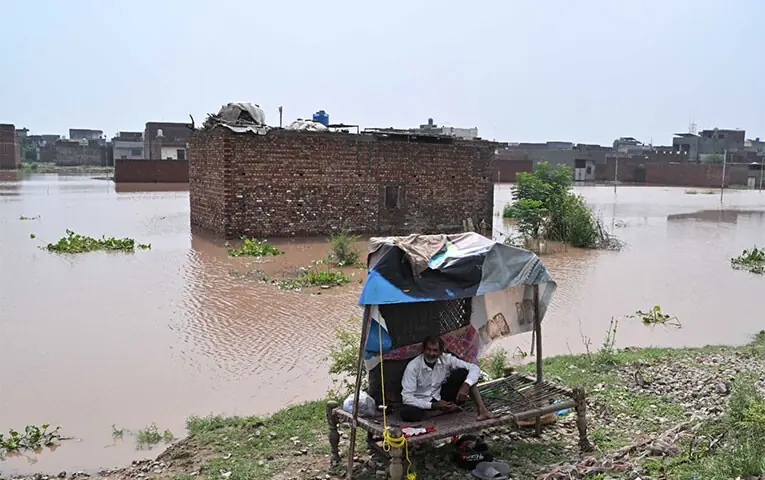
Recent floods in Punjab, Pakistan, have inundated over 94 villages across Ferozewala, Muridke, and Kala Shah Kaku, impacting vast tracts of land along the GT Road. According to the Punjab Provincial Disaster Management Authority (PDMA), at least 1,215 houses were affected, with 43,188 acres of land submerged. Rescue operations have evacuated 738 people and 46 livestock, and 13 relief camps have been established. Medical assistance was provided to 1,633 patients through over a dozen medical camps and mobile clinics, with 4,085 ration bags distributed. Rescue 1122 deployed dewatering sets, and municipal committees also contributed to the effort. While water levels in the Bhed and Deg nullahs were receding by Thursday, officials warned that predicted heavy rainfall could lead to renewed flooding. The Lahore commissioner and Sheikhupura deputy commissioner are actively overseeing the situation and coordinating departmental responses. Additional boats have been deployed to reach residents in still-submerged rural and semi-urban areas, and police are present to ensure safety and security. Residents have confirmed an intensification of rescue and relief operations, noting the arrival of more boats and the provision of food supplies. The Flood Forecasting Division (FFD) reported that the Indus River is at a medium flood level at Guddu Barrage and will reach Sukkur Barrage, while the Chenab River is expected to fluctuate between low and high floods. Although major rivers are flowing below the low flood threshold, the FFD predicts medium-to-high-level flows in various nullahs of the Jhelum, Chenab, and Ravi rivers.
The recent flooding in Punjab highlights the persistent vulnerability of communities to extreme weather events, exacerbated by infrastructure and land use patterns. While official response mechanisms, including evacuations, relief camps, and medical aid, appear to be operational, the recurring threat of renewed flooding underscores the need for more robust, long-term flood management strategies. This includes investing in resilient infrastructure, improving early warning systems, and potentially re-evaluating development in flood-prone areas. The interplay between natural river flows and localized nullah inundation suggests complex hydrological challenges that require integrated water resource management. Looking ahead, climate change projections indicate an increased frequency and intensity of such events, necessitating proactive adaptation measures to mitigate future risks and protect vulnerable populations.
AI-generated to prompt reflection — not editorial opinion, not advice, not a statement of fact. How this works.