Punjab's Habitual Offenders Bill Criticized as 'Open Jail' Threat by Rights Activists
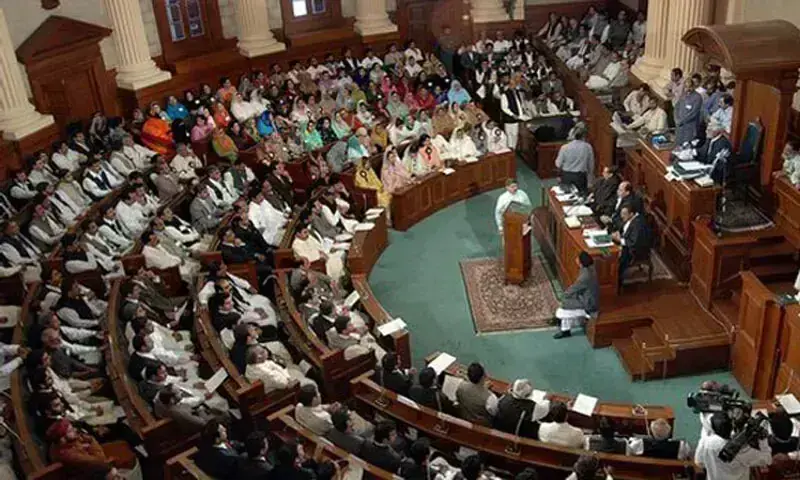
Human rights defenders and activists in Lahore have voiced strong opposition to the Punjab Control of Habitual Offenders and Anti-Social Behaviour Bill, 2026, warning it could transform the entire province into an "open jail." Critics argue the bill aims to suppress dissent by targeting individuals with "anti-national opinions" or differing ideologies, labeling them as habitual offenders or anti-social elements. Lawyer Asad Jamal explained that the bill redefines "habitual offender" to include individuals against whom a challan has been submitted, effectively treating accused persons as guilty until proven innocent, a reversal of established legal principles. He also noted the bill's potential to legitimize and expand the powers of a problematic Crime Control Department, which he claims has operated with impunity. The proposed legislation's structure is compared by lawyer Ali Javed to the British-era Criminal Tribes Act, designed for suppressing local populations, and it enables preemptive action rather than punishment for committed crimes. Law professor Adnan Sattar described the bill as a new level of repression, lacking any balancing provisions. Opposition MPA Sheikh Imtiaz Mehmood criticized the bureaucracy and stated the bill contravenes numerous constitutional articles, suggesting it could be used to target political opponents, particularly the PTI, and labor unions. He also alluded to a 'state capture' of institutions, including the judiciary. Prominent figures including HRCP Director Farah Zia, Hussain Naqi, Salima Hashmi, Bushra Khalique, and Arshad Dogar also participated in the discussion.
The proposed Punjab Control of Habitual Offenders and Anti-Social Behaviour Bill, 2026, appears to shift the legal paradigm from punitive justice to preemptive control, raising concerns about its potential for misuse. By broadening definitions of 'habitual offender' and 'anti-social behaviour,' the legislation could inadvertently create mechanisms for suppressing political dissent and ideological opposition, rather than solely addressing criminal conduct. This approach risks undermining the presumption of innocence, a cornerstone of due process, and could foster an environment where perceived threats are neutralized before any offense is proven. The historical parallels drawn to colonial-era legislation highlight the enduring tension between state security imperatives and individual liberties. Future governance models will need to balance robust public safety measures with constitutional protections, ensuring that legal frameworks do not become instruments for political control or stifle fundamental freedoms in the digital age.
AI-generated to prompt reflection — not editorial opinion, not advice, not a statement of fact. How this works.