Punjab Sees Most Threats Against Journalists in Pakistan, Freedom Network Reports
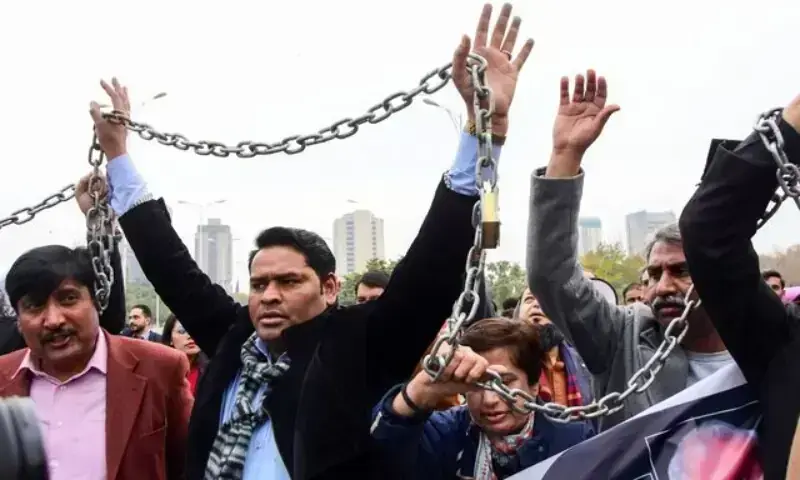
Punjab province in Pakistan recorded the highest number of threats against journalists, with 15 cases reported between April and June 2026, out of a national total of 22 such incidents. This marks an increase from the first quarter of 2026, which saw eight cases in Punjab and a total of 18 nationwide. The Freedom Network's quarterly assessment highlights a concerning trend where state institutions are increasingly involved in intimidating media practitioners, particularly those reporting on corruption and governance issues. Khyber Pakhtunkhwa remained the second most dangerous province, with its case count falling from five in the first quarter to three in the second. Sindh and Balochistan each reported one case per quarter, while Islamabad Capital Territory and Gilgit-Baltistan documented one case each in the second quarter. No verified incidents were reported from Azad Jammu and Kashmir.
The review categorized violations including legal action, threats of legal action, arrests, assaults, and threats of harm or murder. State actors were identified as the primary threat in 68% of the documented cases, with legal and administrative measures being the dominant pattern of intimidation. Journalists working on digital platforms or covering sensitive topics like corruption and public interest matters were found to be the most vulnerable. Physical violence also remained a serious concern, with incidents of attempted murder and assault resulting in injury reported in Punjab. The report also noted growing pressure on online journalists, YouTubers, and freelancers, indicating that digital journalism is particularly susceptible to legal and regulatory actions.
The Freedom Network's report from July 2026 indicates a concerning rise in threats against journalists in Pakistan, with a notable increase in cases during the second quarter compared to the first. The data suggests a systemic issue where state institutions are leveraging legal and administrative mechanisms to suppress reporting, particularly on corruption and governance. This pattern, observed across multiple provinces, poses a significant challenge to press freedom and accountability journalism. The increasing vulnerability of digital journalists and online content creators highlights the evolving landscape of media repression in the digital age. Future efforts to safeguard journalists will need to address both physical security and the misuse of legal frameworks, especially in the context of an increasingly interconnected and digital information environment.
AI-generated to prompt reflection — not editorial opinion, not advice, not a statement of fact. How this works.