Putin Commends North Korean Support Amidst International Scrutiny
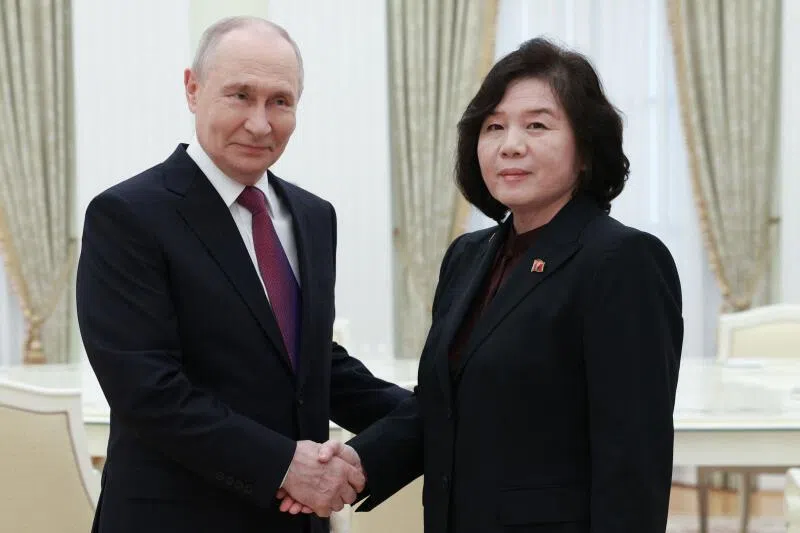
Russian President Vladimir Putin met with North Korean Foreign Minister Choe Son Hui in Moscow on Tuesday. During the meeting, Putin expressed gratitude for North Korea's support, stating that Russia would never forget the "heroic deeds" of North Korean soldiers. This high-level diplomatic engagement occurs at a time when both nations face increasing international isolation and sanctions. The visit underscores the deepening ties between Moscow and Pyongyang, particularly in the context of ongoing geopolitical tensions. North Korea has been a vocal supporter of Russia's actions in Ukraine, a stance that has drawn criticism from Western powers. The meeting between Putin and Choe Son Hui is expected to further solidify their strategic partnership. Details regarding specific agreements or future collaborations were not immediately disclosed, but the rhetoric suggests a strengthening of mutual defense and economic cooperation. The encounter highlights a growing alignment between Russia and North Korea on the global stage.
This diplomatic exchange between Russia and North Korea highlights a strategic alignment driven by mutual geopolitical pressures. Both nations are subject to extensive international sanctions, fostering an environment where cooperation offers a potential avenue for circumventing economic isolation and bolstering defense capabilities. The invocation of historical military support by President Putin serves to frame the current relationship within a narrative of long-standing alliance, potentially aimed at solidifying domestic and international perceptions of their partnership. From a systems perspective, this deepening relationship could represent a recalibration of global power dynamics, challenging existing international norms and security architectures. The long-term implications will depend on the sustainability of their economic ties and the extent to which this alignment influences regional stability and broader international relations over the next decade.
AI-generated to prompt reflection — not editorial opinion, not advice, not a statement of fact. How this works.