Putin to Escalate Ukraine War Despite Trump's Peace Push, Sources Say
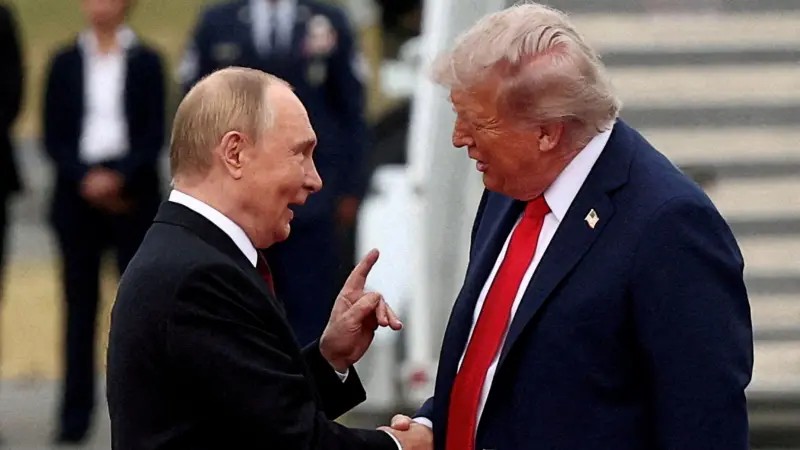
Russian President Vladimir Putin is reportedly set to intensify the war in Ukraine in the coming months, rejecting calls for peace negotiations, according to three anonymous sources close to the Kremlin cited by Reuters. Putin remains committed to capturing the remainder of the Donbas region in eastern Ukraine, and recent Ukrainian drone attacks on Russian oil refineries and ports have seemingly strengthened his resolve to continue fighting. One source indicated that Putin recently reprimanded advisors who suggested a ceasefire along current front lines. This stance comes despite efforts from former US President Donald Trump, who reportedly spoke with Putin for nearly 90 minutes and offered assistance in finding a resolution to the conflict. Trump's advisor stated that the US president confirmed his willingness to work towards a swift end to hostilities and solutions to overcome the crisis. The Kremlin, through advisor Yuri Ushakov, described the conversation as "professional and quite constructive," asserting that Russia seeks a "political-diplomatic resolution of the conflict, taking into account Russia's fundamental approach." Ushakov also accused Kyiv and its European allies of favoring the conflict's prolongation and escalation, as well as engaging in terrorism against civilians, referencing Ukraine's long-range attacks on Russian targets, particularly in the oil industry. He claimed Putin detailed the battlefield situation, stating Russian forces are advancing confidently and liberating settlements. This assertion follows reports from Russian commanders on Friday, October 3rd, that Moscow's troops captured the strategic city of Kostiantynivka in the Donetsk region, a claim disputed by Ukrainian President Volodymyr Zelenskyy, who stated Ukrainian forces still controlled the city on Saturday.
The reported intransigence of President Putin regarding peace negotiations, juxtaposed with former President Trump's overtures, highlights a divergence in approaches to conflict resolution. While the Kremlin frames its actions as defensive and aimed at achieving fundamental objectives, and points to battlefield advances, external drone attacks on critical infrastructure may be perceived by Russia as escalatory, reinforcing a narrative of external aggression that justifies continued military operations. The differing perspectives on the strategic situation, particularly regarding control of Kostiantynivka, underscore the challenges in establishing a common factual basis for diplomacy. Future conflict resolution will likely depend on whether systemic pressures, such as sustained military costs or evolving geopolitical alliances, compel a reassessment of objectives by key actors, rather than solely on bilateral diplomatic initiatives.
AI-generated to prompt reflection — not editorial opinion, not advice, not a statement of fact. How this works.