Putin Used Meeting with Kazakhstan President to Justify Continued Ukraine War, ISW Reports
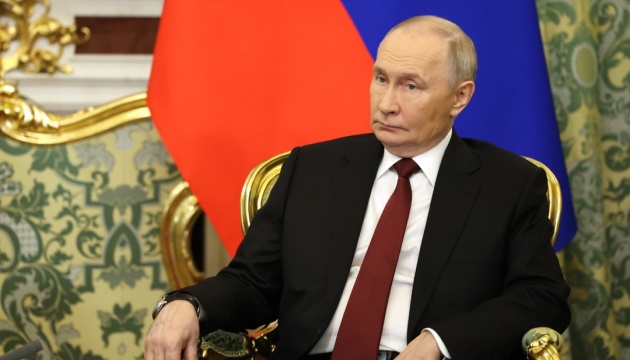
Russian President Vladimir Putin reportedly used a meeting with Kazakhstan's President Kassym-Jomart Tokayev to justify his refusal to freeze the front lines in Ukraine. The Institute for the Study of War (ISW) suggests that Putin leveraged this diplomatic encounter to frame his ongoing military operations. This implies that Putin sought to present his decision to continue the war as a strategic necessity, potentially seeking international understanding or at least a lack of overt opposition from key regional partners. The interaction highlights Russia's ongoing efforts to manage international perceptions of the conflict. Putin's objective appears to be to shore up support or neutrality from nations like Kazakhstan, which hold significant geopolitical sway. The ISW's assessment points to a deliberate strategy by the Kremlin to use bilateral meetings for propaganda purposes. This tactic aims to legitimize Russia's actions on the international stage. The report indicates that Putin is actively working to shape narratives surrounding the war, even within seemingly neutral diplomatic exchanges.
This event suggests a strategic use of diplomatic engagements by the Russian leadership to legitimize ongoing military actions. By framing the refusal to freeze the conflict within a meeting with a regional partner like Kazakhstan, Russia appears to be attempting to cultivate an image of reasoned decision-making rather than unilateral aggression. This tactic, if successful, could influence perceptions among non-aligned nations, potentially mitigating international pressure. The underlying incentive for Russia is to maintain strategic flexibility and avoid a de facto stalemate without achieving its objectives. In the context of the evolving global landscape, particularly concerning technological advancements and shifting alliances, such diplomatic maneuvers underscore the complex interplay between military strategy and international relations. Future developments may reveal whether these efforts effectively alter the geopolitical calculus or are perceived as attempts to circumvent accountability.
AI-generated to prompt reflection — not editorial opinion, not advice, not a statement of fact. How this works.