Qatar Reports Progress in US-Iran Talks to End War, Oil Prices Dip
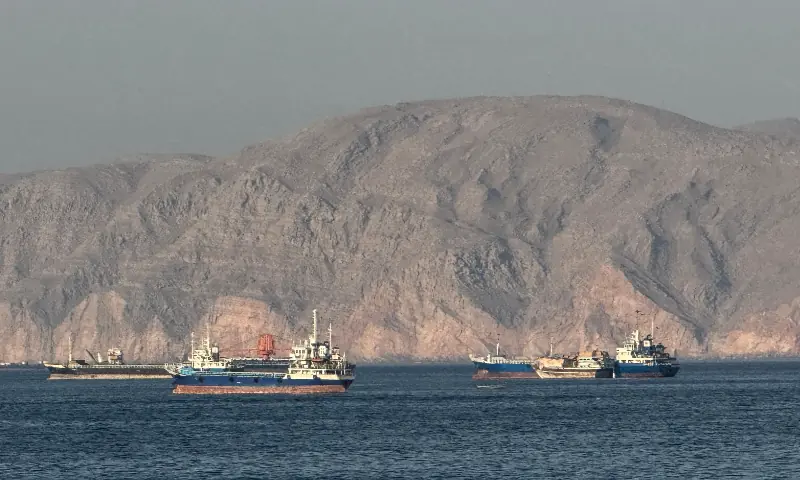
Qatar announced on Tuesday that mediators are making progress in facilitating talks aimed at ending the US-Iran war, a development that caused oil prices to fall significantly. Benchmark Brent crude dropped over four percent, building on previous losses, amid hopes that an agreement could soon be reached to reopen the Strait of Hormuz. However, the strait remains largely closed, with reports of another vessel being attacked while attempting to transit. President Donald Trump had previously stated that talks with Tehran had commenced and presented Iran with a 'last chance' to negotiate. Iranian officials, however, denied any ongoing negotiations with the United States, specifying that their only discussions were with Oman concerning the strait and that no major meetings were scheduled for the week. Senior US officials, including Treasury Secretary Scott Bessent and Secretary of State Marco Rubio, expressed optimism about progress in discussions to reopen the Strait of Hormuz, a critical route for global energy shipments. Rubio indicated that while progress has been made, a final agreement is not yet in place but is anticipated shortly. Bessent suggested a deal could be reached by Wednesday. Qatar's foreign ministry spokesperson, Majed al-Ansari, confirmed that diplomatic contacts had reached 'very progressive stages,' with mediators like Qatar, Pakistan, and Oman coordinating efforts to exchange proposals between Washington and Tehran. Trump's remarks followed his decision to call off 'massive attacks' on Iran, continuing a pattern of threatening military action before pivoting to diplomacy. Despite these diplomatic efforts, shipping risks persist, with Iran controlling most traffic through Hormuz and the US blockading Iran-related shipping. The Houthi movement in Yemen has also imposed a blockade on Saudi Arabia in the Red Sea, further constricting oil export routes. A cargo ship was reportedly struck by an unidentified projectile near the Strait of Hormuz, forcing its crew to abandon the vessel, with one seafarer missing. Iran's demands for full control over inbound shipping and oversight of outbound traffic in the strait represent a significant shift in regional power dynamics. Meanwhile, concerns are mounting over the sustainability of the US military campaign, as the US Army has depleted its stockpile of precision missiles, impacting readiness for future conflicts. Analysts suggest Iran may be attempting to outlast Washington by leveraging regional trade routes and energy infrastructure as points of pressure.
The reported progress in US-Iran talks, mediated by Qatar, highlights a complex geopolitical strategy where diplomatic overtures are intertwined with economic pressure points, specifically the Strait of Hormuz. The volatility in oil prices reflects market sensitivity to potential disruptions and resolutions in this critical energy corridor. Iran's stated objective of full control over Hormuz shipping, if realized, would fundamentally alter regional power balances and influence global energy security dynamics. Simultaneously, the US military's reported depletion of precision missile stockpiles raises questions about the long-term viability and strategic sustainability of its military posture in the region. This situation presents a classic case of asymmetric statecraft, where one party seeks to leverage economic and logistical chokeholds against a technologically superior adversary, testing the latter's political will and resource endurance over time.
AI-generated to prompt reflection — not editorial opinion, not advice, not a statement of fact. How this works.
