Quantum Error Correction Uses Reinforcement Learning to Recalibrate Processors
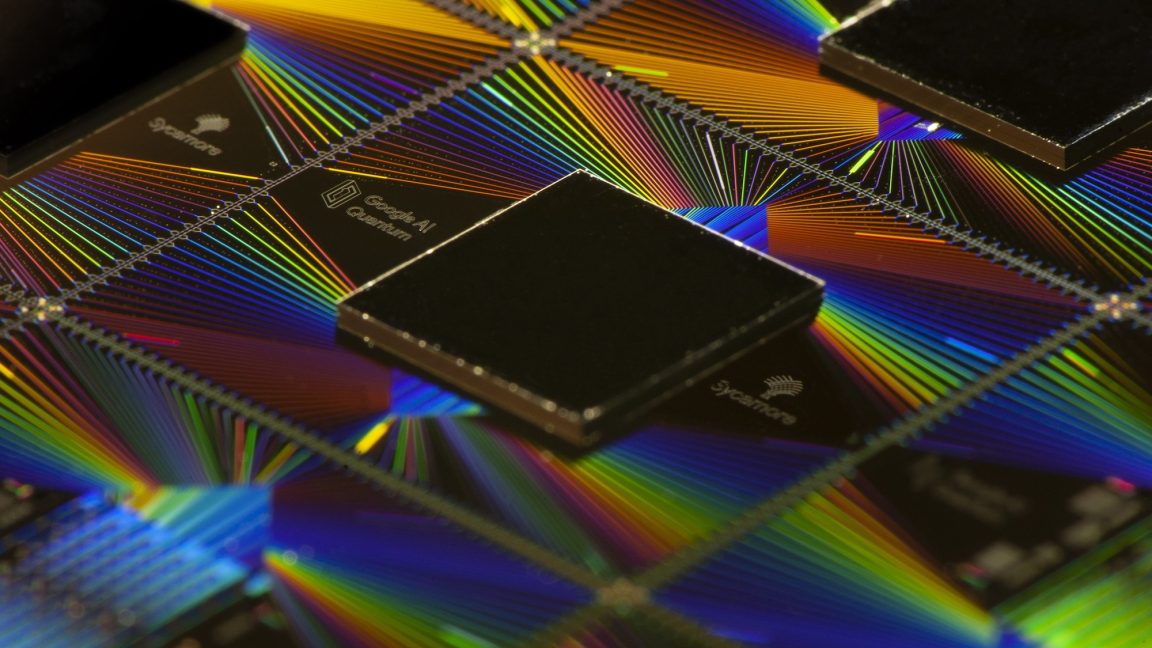
Researchers have developed a novel method for quantum error correction that leverages reinforcement learning to continuously recalibrate quantum processors. This technique utilizes error information gathered from the quantum system to dynamically adjust the control algorithms responsible for maintaining qubit coherence. The goal is to mitigate the impact of noise and decoherence, which are significant challenges in building stable and scalable quantum computers.
By employing reinforcement learning, the system can learn optimal strategies for error correction in real-time. This adaptive approach allows the quantum processor to self-correct errors as they arise, rather than relying on pre-programmed correction protocols. This continuous recalibration is crucial for improving the reliability and accuracy of quantum computations, paving the way for more robust quantum hardware.
This advancement in quantum error correction signifies a move towards more autonomous and adaptive quantum computing systems. By integrating reinforcement learning, the technology addresses the inherent fragility of qubits by enabling real-time error mitigation. This approach could accelerate the development of fault-tolerant quantum computers by reducing the overhead associated with traditional error correction methods. The long-term implications involve potentially more stable and scalable quantum architectures, which are critical for unlocking the full potential of quantum computation in fields like drug discovery, materials science, and complex optimization problems.
AI-generated to prompt reflection — not editorial opinion, not advice, not a statement of fact. How this works.