Quantum Physics and AI Could Aid Direct Exoplanet Imaging
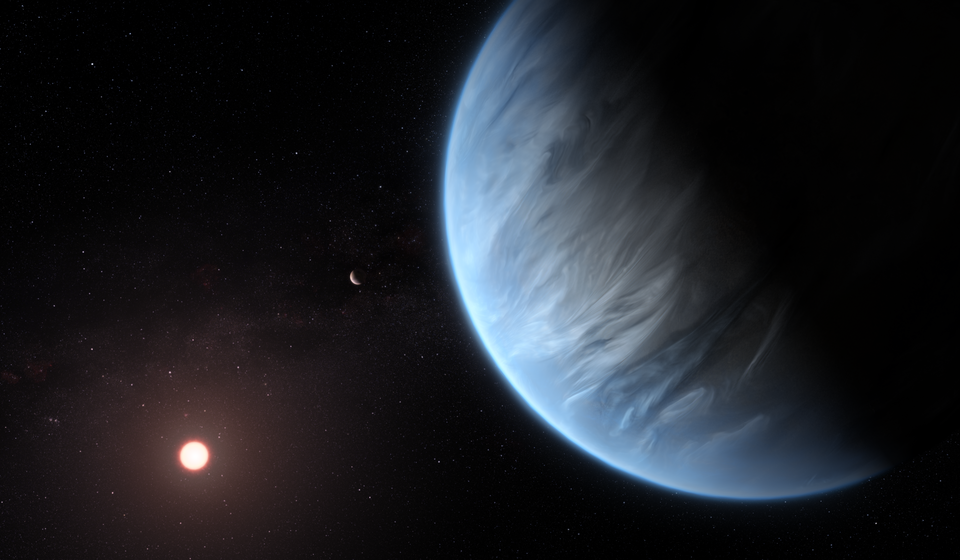
Astronomers face a significant challenge when attempting to directly image exoplanets, often comparing the task to spotting a firefly next to a searchlight. Earth-like exoplanets are exceptionally faint, typically ranging from 100 million to 10 billion times dimmer than their host stars, making direct observation extremely difficult. However, a new theoretical solution has been proposed by Hyunsoo Choi of Hanyang University in South Korea and his colleagues. Their research, detailed in a pre-print paper available on arXiv, suggests a novel approach combining advanced computer algorithms with principles of quantum physics. This innovative method aims to overcome the immense contrast issue that has long hindered the direct detection of these distant worlds. The proposed technique could potentially revolutionize the search for Earth-like planets beyond our solar system.
The proposed integration of quantum physics and sophisticated algorithms offers a novel theoretical framework for overcoming a fundamental observational hurdle in exoplanet research: the extreme luminosity contrast between stars and their orbiting planets. This approach moves beyond incremental improvements in telescope technology, suggesting a paradigm shift in data processing and signal extraction. By leveraging quantum phenomena and advanced computational techniques, the method could enhance the sensitivity and resolution of direct imaging, potentially accelerating the discovery of Earth-like exoplanets. The long-term implications for astrobiology and our understanding of planetary system formation are substantial, though the practical implementation and scalability of such a quantum-enhanced system will require significant technological development and validation.
AI-generated to prompt reflection — not editorial opinion, not advice, not a statement of fact. How this works.