Quantum Simulator Exhibits Topological Phase Transitions and Mixed-State Order
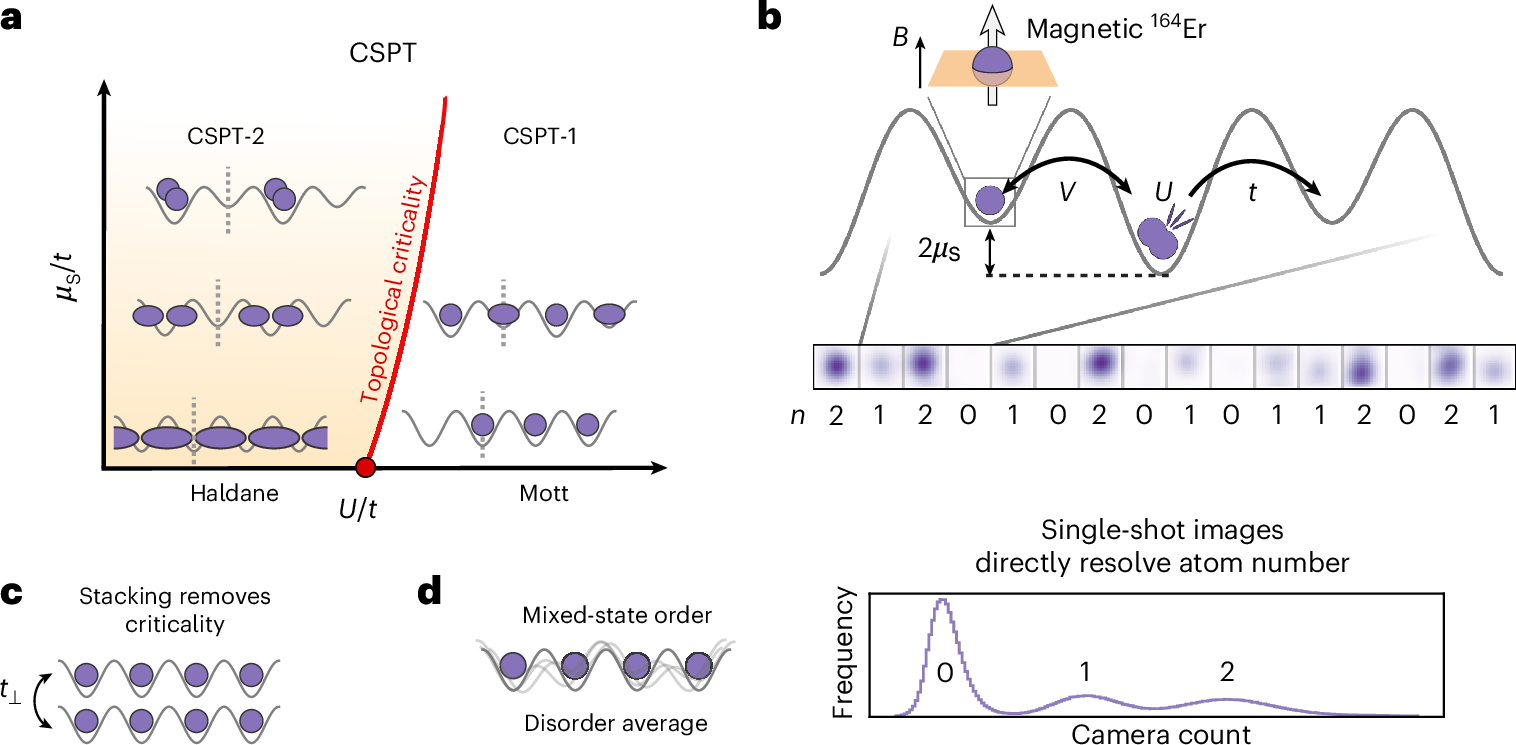
Researchers have successfully demonstrated topological phase transitions and mixed-state order within a Hubbard quantum simulator. This groundbreaking work utilizes a quantum simulator designed to mimic the behavior of electrons in materials, specifically focusing on the Hubbard model, which is crucial for understanding phenomena like superconductivity. The experiment allowed scientists to observe how the system's properties change as parameters are varied, leading to distinct topological phases. Furthermore, the study revealed the presence of mixed-state order, a complex quantum state where the system exhibits characteristics of multiple ordered phases simultaneously. This achievement is significant because it provides a controllable platform for studying fundamental quantum mechanics and exploring exotic states of matter. Such simulations are vital for advancing our understanding of condensed matter physics and could pave the way for the development of new quantum technologies. The ability to experimentally verify theoretical predictions about topological phases and mixed-state order in a quantum simulator offers a powerful tool for future research in quantum science.
This research leverages a quantum simulator to experimentally investigate complex quantum phenomena, offering a tangible pathway to validate theoretical models of topological phase transitions and mixed-state order. By providing a controlled environment, such simulators can illuminate the intricate interplay of quantum interactions that govern material properties, potentially accelerating discoveries in areas like high-temperature superconductivity. The ability to observe emergent behaviors in a simulated quantum system highlights the growing power of quantum simulation as a scientific tool, enabling exploration of physics beyond the reach of classical computation. This work underscores the importance of developing robust quantum simulation platforms for advancing fundamental physics and informing the design of future quantum technologies.
AI-generated to prompt reflection — not editorial opinion, not advice, not a statement of fact. How this works.