Régis Bittencourt Highway Concession Sold for R$7 Billion in Investment
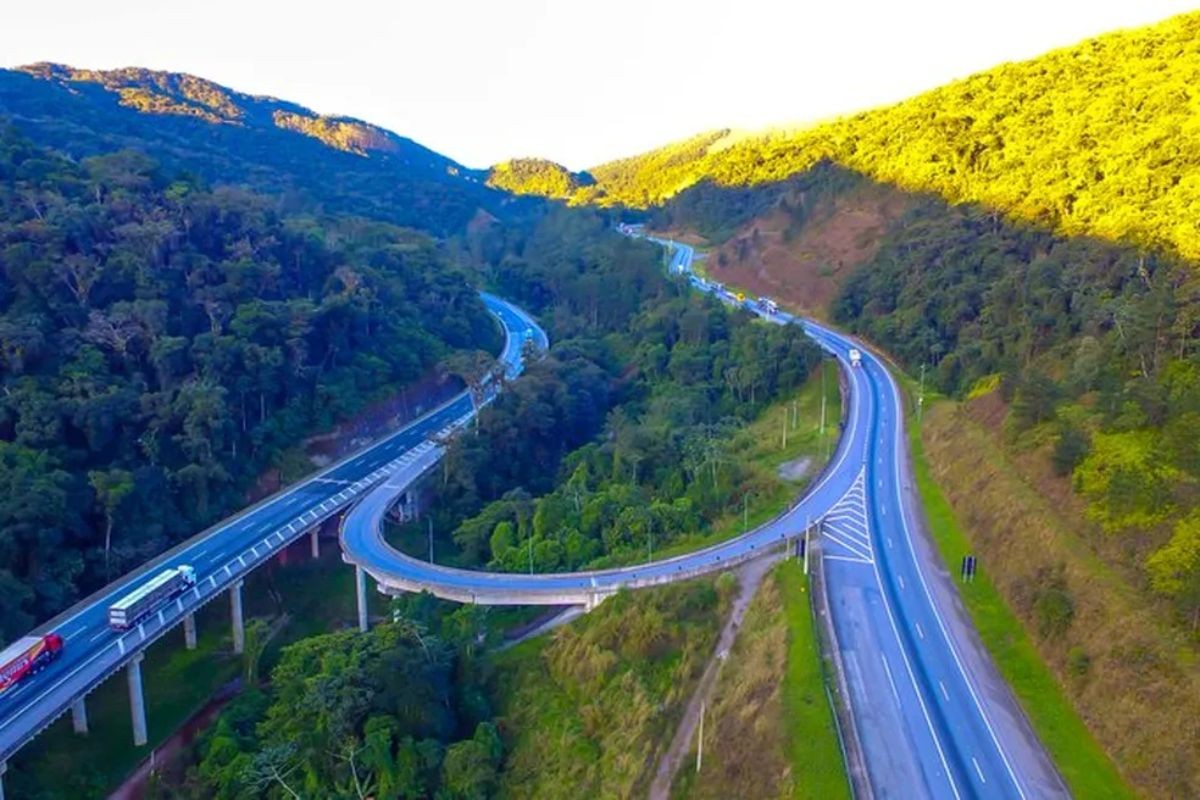
The BR-116 highway stretch between Paraná and São Paulo, known as the Régis Bittencourt Highway, will receive R$7 billion in investments following its auction to the concessionaire EPR. The auction, held on Thursday (23) in São Paulo, saw EPR acquire the concession for this nearly 400-kilometer route that connects São Paulo and Curitiba, passing through 16 cities and serving as a vital corridor for cargo transport and agricultural/industrial production from the South and Southeast regions. The 15-year contract mandates R$7.2 billion in planned works, including approximately 70 kilometers of additional lanes, 32 kilometers of marginal roads, two tunnels, and 18 pedestrian bridges, alongside improvements in mountainous sections and high-congestion areas. EPR secured the concession by offering a 22.35% discount on the basic toll rate, outbidding Motiva (12.1% discount) and Arteris (0.01% discount). Additionally, EPR will pay a fixed R$120 million for the concession acquisition. The previous contract, held by Arteris until 2033, was renegotiated due to Arteris' request for adjustments to investment timelines and contractual goals, leading the federal government to initiate a simplified auction to sell the existing concession. This new auction follows over 300 administrative processes opened by the National Land Transport Agency (ANTT) against Arteris for alleged contract non-compliance. Arteris had previously agreed to invest an additional R$370 million to settle investigations. The ANTT deemed the current contract unbalanced, citing issues like severe asphalt degradation, high accident rates, and frequent traffic interruptions, negatively impacting driver safety and comfort.
The auction of the Régis Bittencourt Highway concession represents a shift in public-private partnerships for Brazilian infrastructure. The federal government's move to re-auction a concession before its original expiration, citing contract 'stress' and non-compliance, highlights the challenges in aligning long-term infrastructure development with private sector financial incentives and operational realities. The significant investment commitment from EPR, coupled with a substantial toll discount, suggests a market assessment that future revenue potential outweighs current operational risks, potentially driven by anticipated traffic growth and efficiency gains. This event underscores the ongoing tension between governmental oversight of essential public services and the pursuit of private capital, prompting reflection on contractual frameworks that ensure both public benefit and sustainable private investment over the long term, especially in the context of evolving transportation needs and technological advancements.
AI-generated to prompt reflection — not editorial opinion, not advice, not a statement of fact. How this works.