Racist banner removed in Belgium, possibly in response to artist Sophie Straat's comments
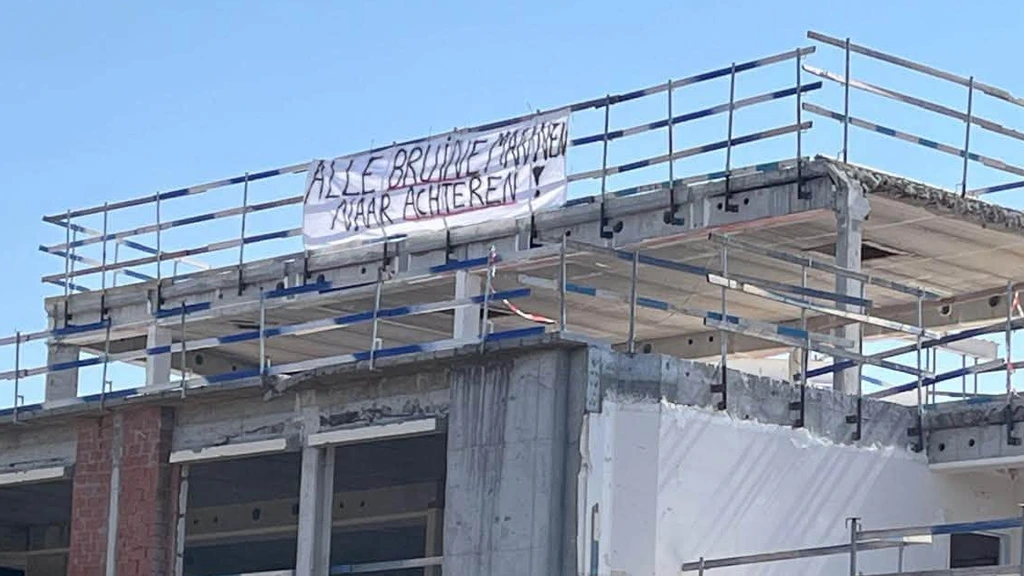
A large banner with the message 'all brown men to the back' was removed by police from a building along the E40 highway in Drongen, near Ghent, Belgium. The banner's duration on the building is unclear, but diversity expert Khalid Benhaddou from Ghent University stated he received photos from a friend, indicating it had been there for days. Benhaddou condemned the message as 'just racism' and stated that such banners do not belong in society, highlighting how reducing people to their skin color or origin can lead to dangerous slogans. The banner is believed to be a reaction to statements made by Dutch artist Sophie Straat at festivals in June. During a performance at the Best Kept Secret festival, Straat urged 'white men to the back' when announcing a mosh pit, explaining she wanted to create space for women, queer individuals, and people of color who might feel less safe in such a setting. She later faced significant backlash, including hate messages and threats, and repeated the phrase at the Gentse Feesten. While Dutch anti-discrimination bodies found Straat's comments not to be discriminatory as they applied only to a specific mosh pit and did not involve refusal of entry, Belgium's equal opportunities center, Unia, received hundreds of complaints. Unia acknowledged that some found the statements hurtful or polarizing but noted they were made within an artistic and political performance aimed at highlighting structural inequalities. The center considers such expressions protected by freedom of speech, even if provocative, and viewed Straat's statement as symbolic and artistic, emphasizing that only a court can make a definitive judgment.
The incident highlights the complex interplay between artistic expression, societal sensitivities, and the potential for retaliatory actions. While Dutch authorities deemed Sophie Straat's statements non-discriminatory within the context of a specific performance, the Belgian response and the subsequent banner demonstrate how symbolic language can be interpreted and amplified, leading to polarized reactions. This situation underscores the challenges of navigating identity politics and the risk of devolving into simplistic, exclusionary rhetoric when addressing systemic inequalities. The rapid escalation from artistic statement to public banner suggests a societal environment where nuanced dialogue is easily overshadowed by immediate, often inflammatory, responses, prompting reflection on the mechanisms for fostering constructive discourse on diversity and inclusion.
AI-generated to prompt reflection — not editorial opinion, not advice, not a statement of fact. How this works.