Rain destroys community-built bridge in RS for second time
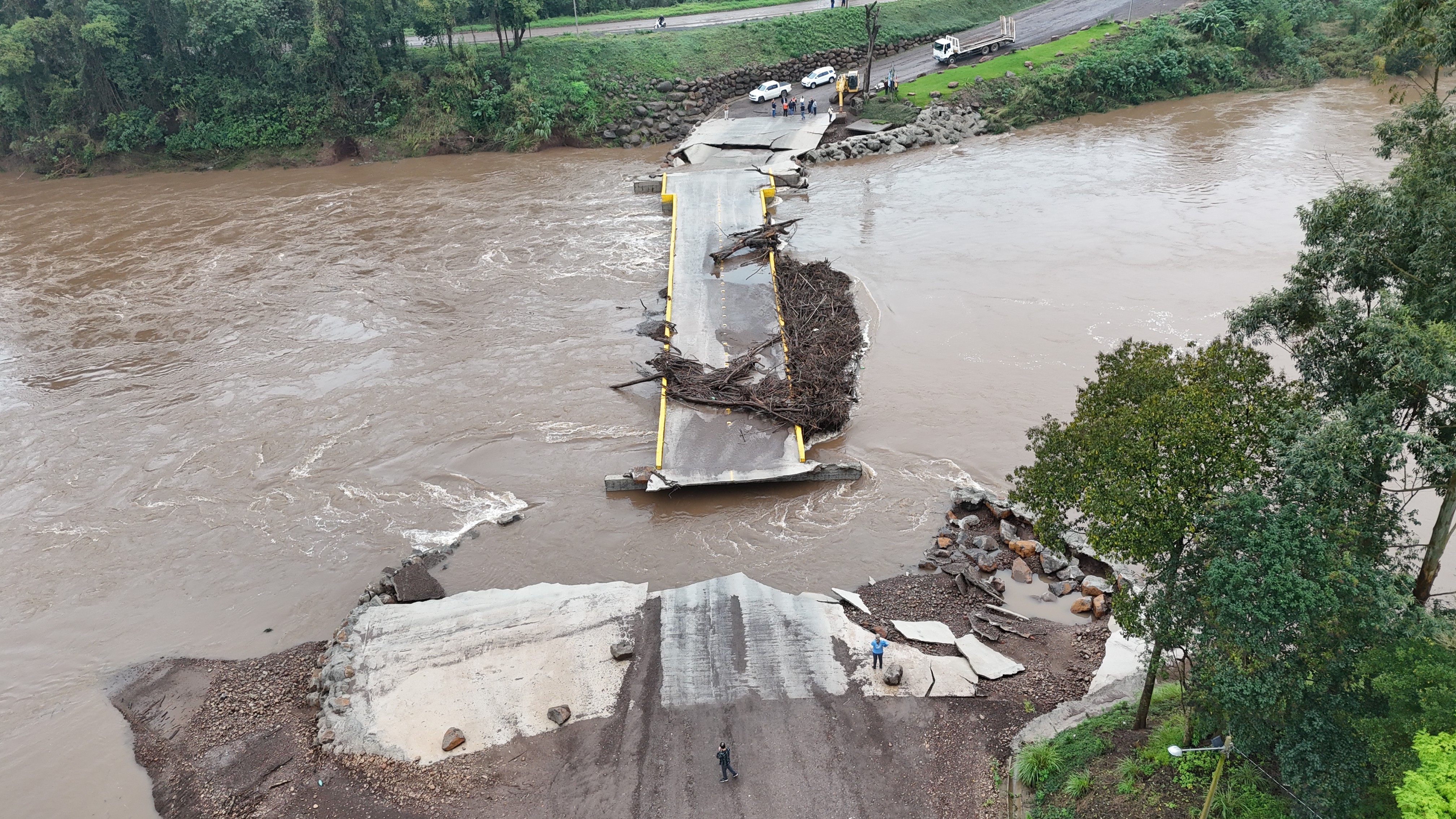
The "Ponte da FelizCidade" in Feliz, Rio Grande do Sul, has been destroyed by heavy rainfall for the second time. The bridge, which connected Arroio Feliz and Picada Cará, had both its abutments washed away by the current on Wednesday, July 22nd. This crossing was crucial for residents, significantly shortening travel times to inland communities. Feliz is located approximately 80 km from Porto Alegre. The state of Rio Grande do Sul has been severely impacted by recent storms, with at least 169 municipalities reporting damage including floods, blocked roads, fallen trees, and structural damage to bridges. The history of this specific bridge is marked by repeated destruction from floods. Following a major flood in May 2024 that destroyed a previous bridge over the Rio Caí, the local community rallied together five months later to construct this temporary crossing using funds raised through raffles and donations. However, in January 2025, the "Ponte da FelizCidade" was swept away for the first time. After another community effort, the bridge was rebuilt and reopened in March 2026, only to be damaged again by recent heavy rains. On Wednesday, the Rio Caí reached 5.9 meters, exceeding the attention level of 5 meters. In a six-hour period on Wednesday, Feliz recorded 42 millimeters of rain, and despite not reaching extreme flood levels, the force of the water was sufficient to damage the bridge's abutments.
The repeated destruction of the "Ponte da FelizCidade" highlights the vulnerability of community-driven infrastructure in regions prone to extreme weather events. While community solidarity and resourcefulness in rebuilding are commendable, the recurring damage suggests a systemic challenge in adapting to increased flood risks, potentially exacerbated by climate change. Future resilience may depend on integrating more robust engineering solutions, potentially with governmental support, that account for projected changes in rainfall intensity and river levels. This situation underscores the need for proactive, long-term planning that balances immediate community needs with the evolving environmental realities of the region.
AI-generated to prompt reflection — not editorial opinion, not advice, not a statement of fact. How this works.