Rajshahi University removes billboards of individuals convicted of war crimes after student protests.
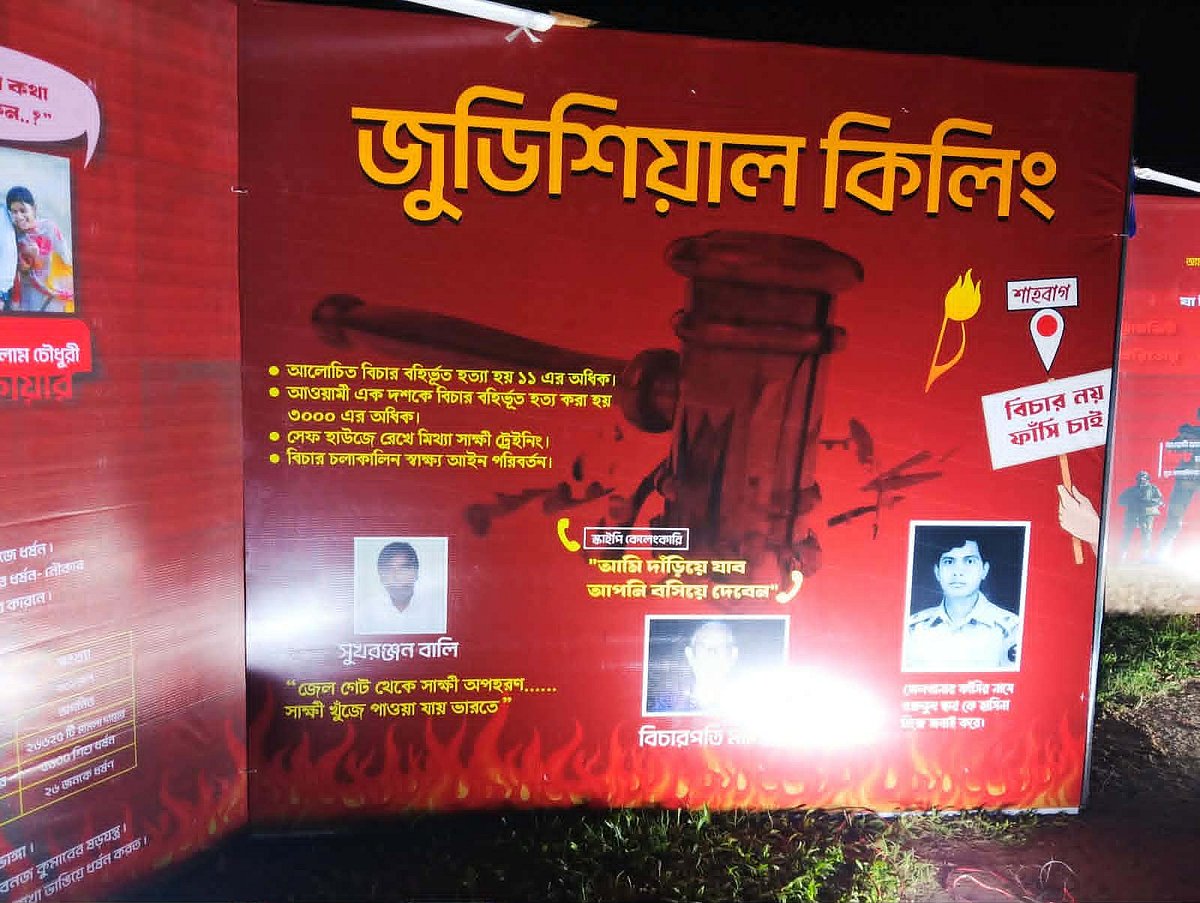
The administration of Rajshahi University has removed the billboards featuring individuals convicted of crimes against humanity during the 1971 Liberation War. This action was taken in response to protests organized by the university's students. The removal addressed the presence of these images on campus, which had become a point of contention. The university administration's decision signifies a response to student demands and concerns regarding the commemoration of individuals associated with such serious offenses. This event highlights the ongoing societal discourse surrounding historical accountability and the representation of figures involved in past atrocities.
The university's decision to remove the billboards reflects a response to public sentiment and student activism concerning historical figures convicted of war crimes. This action underscores the evolving dynamics of how societies choose to memorialize or distance themselves from individuals associated with past atrocities. Such decisions often involve navigating complex ethical considerations, public opinion, and the potential for historical revisionism. In the context of the digital age and increased information accessibility, institutions are increasingly pressured to align their public displays with contemporary values and a commitment to human rights principles. This event may prompt further dialogue on institutional responsibility in managing public spaces and historical narratives.
AI-generated to prompt reflection — not editorial opinion, not advice, not a statement of fact. How this works.
