Ramos de Azevedo Building Rediscovered After 85 Years of Abandonment in São Paulo
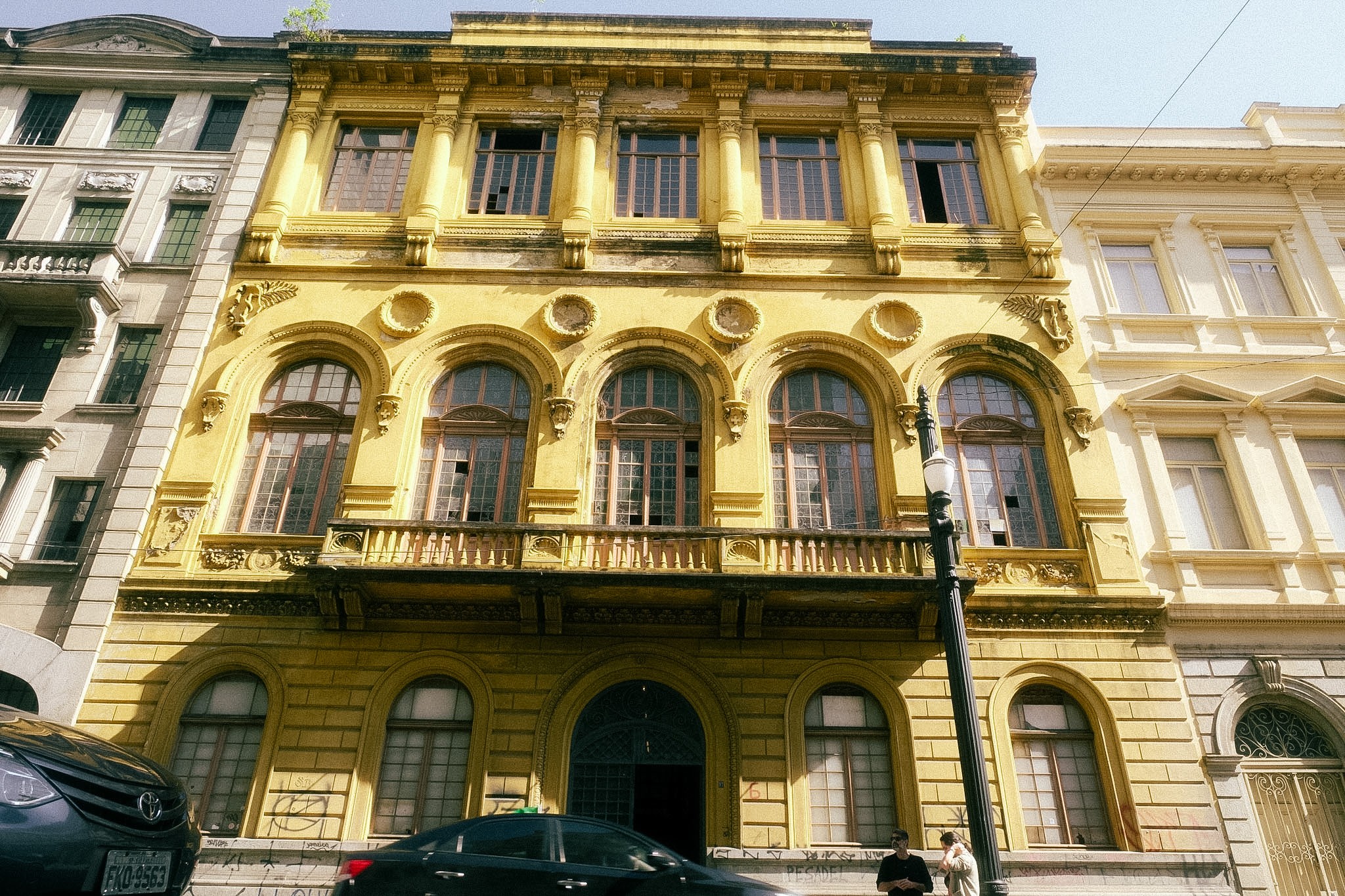
A forgotten yellow building in São Paulo's historic center, located at Rua Roberto Simonsen, 97, has been identified as a work by renowned architect Ramos de Azevedo. Constructed in 1919, the edifice originally housed a polyclinic and the São Paulo Society of Medicine and Surgery, playing a significant role in the city's medical assistance and scientific production before the establishment of USP's Faculty of Medicine. After 85 years of abandonment, the building stands as a preserved ruin, with exposed bricks, water damage, and broken windows, yet retaining rare original elements like century-old floors and most of its stained-glass windows. Real estate developer Allan Ruiz acquired the property in 2025 and noted that the prolonged disuse surprisingly aided its preservation. The discovery of Azevedo's authorship occurred serendipitously through inscriptions on the bricks and research by Angélica Moreira, later confirmed by original signed blueprints in the Municipal Historical Archive. The building, once a hub for free medical care in eight specialties, scientific research, a library, and an amphitheater, was technologically advanced for its time, built with reinforced concrete in 1919. The polyclinic operated until 1939, closing due to financial difficulties and reliance on subsidies. The property, now a municipal heritage site since 2015, is slated for a partial retrofit, preserving its unique ruin aesthetic while restoring original features. Ruiz plans to transform the "Ruínas do Ramos" into a cultural center for exhibitions and audiovisual productions, contributing to the area's existing cultural and tourist attractions. The rediscovery has sparked growing public interest in São Paulo's historical heritage, as evidenced by a recent urban walk that drew five times the expected number of participants.
The rediscovery of the Ramos de Azevedo building highlights a recurring tension in urban development: the preservation of historical architectural integrity versus the economic realities of property ownership and modernization. The building's 85-year abandonment, while paradoxically aiding its physical conservation, underscores systemic challenges in maintaining and repurposing historical assets. The developer's innovative approach of a "partial retrofit" that embraces the "ruin" aesthetic offers a model for adaptive reuse, balancing historical reverence with contemporary functionality. This strategy could inform future urban planning, encouraging investment in neglected heritage sites by reframing decay as a unique character rather than a liability. The surge in public interest suggests a growing societal desire to connect with urban history, potentially creating a feedback loop where increased appreciation drives demand for preservation and responsible development, mitigating the cycle of neglect driven by a lack of historical awareness.
AI-generated to prompt reflection — not editorial opinion, not advice, not a statement of fact. How this works.