Ranger 7 Transmits First Close-Up Images of the Moon on July 31, 1964
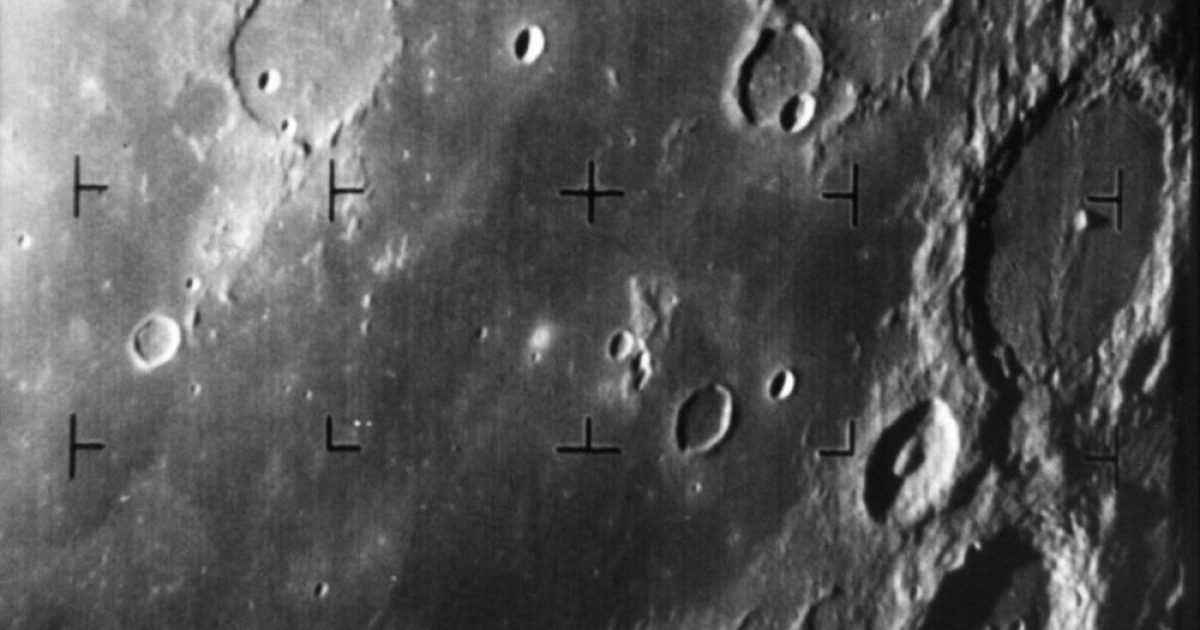
On July 31, 1964, the United States' Ranger 7 spacecraft successfully transmitted the first detailed images of the Moon's surface back to Earth. This mission was a critical component of NASA's Ranger program, initiated as a response to the Soviet Union's Sputnik launch during the intensifying Space Race. The program's objectives evolved significantly following President John F. Kennedy's 1961 declaration to land a human on the Moon. Initially conceived for scientific and exploratory purposes, the Ranger missions were reoriented to support the ambitious goal of lunar human exploration. Ranger 7's successful capture and transmission of high-resolution lunar imagery marked a significant technological achievement and provided invaluable data for future Apollo missions. The spacecraft's ability to obtain these unprecedented close-up views demonstrated advancements in imaging technology and remote sensing capabilities. These images were crucial for understanding the lunar terrain and identifying potential landing sites for subsequent crewed missions. The success of Ranger 7 represented a major step forward for the U.S. in the Space Race, bolstering confidence in the nation's technological prowess.
The Ranger 7 mission, launched during a period of intense geopolitical competition in space exploration, exemplifies how national objectives can rapidly reshape scientific and technological endeavors. The shift from purely scientific inquiry to supporting human lunar landing goals highlights the strategic imperative driving the U.S. space program in the 1960s. This event underscores the dynamic interplay between technological development, national prestige, and ambitious public policy. The data acquired by Ranger 7 provided foundational knowledge for subsequent, more complex missions, demonstrating a systematic, iterative approach to space exploration. Looking forward, such missions illustrate the critical role of precursor robotic exploration in de-risking and enabling future human endeavors, a principle that remains relevant in contemporary space exploration strategies.
AI-generated to prompt reflection — not editorial opinion, not advice, not a statement of fact. How this works.