Rare 3D Snake Fossil Reveals Unexpected Diversity in Early Snake Lifestyles
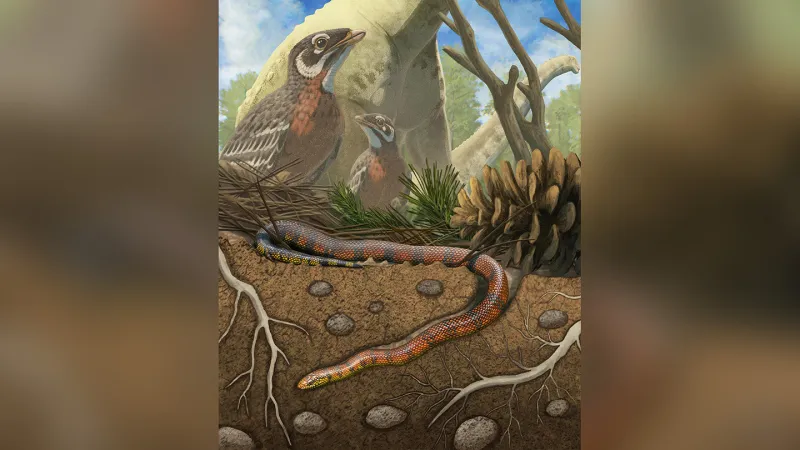
A newly discovered fossil of a snake, preserved in three dimensions, is providing unprecedented insights into the diverse lifestyles of early snakes. The unique cranial anatomy of this specimen suggests that snake evolution was more varied than previously understood. This particular fossil represents a rare burrowing snake, a lifestyle not commonly associated with early snake species. The detailed preservation allows scientists to study its head structure in remarkable detail, offering clues about its diet, locomotion, and sensory capabilities. This finding challenges existing assumptions about the ecological niches occupied by snakes during their evolutionary history. The discovery underscores the importance of fossil evidence in reconstructing the complex evolutionary pathways of ancient life. Further analysis of this specimen promises to deepen our understanding of how snakes adapted to different environments and diversified over millions of years. The rarity of such a well-preserved 3D fossil makes this discovery particularly significant for paleontological research.
The discovery of this exceptionally preserved 3D snake fossil highlights the ongoing potential for paleontological finds to reshape our understanding of evolutionary history. By revealing a rare burrowing lifestyle among early snakes, the fossil challenges previous assumptions about the ecological specialization of these ancient reptiles. This finding prompts a re-evaluation of the environmental pressures and adaptive radiations that drove snake diversification. Future research may explore how this burrowing morphology influenced predator-prey dynamics and habitat utilization in ancient ecosystems, potentially revealing novel evolutionary strategies that could inform our understanding of adaptation in the face of environmental change.
AI-generated to prompt reflection — not editorial opinion, not advice, not a statement of fact. How this works.