Rare Blue-crowned Lorikeet Rediscovered in Indonesia After 90 Years
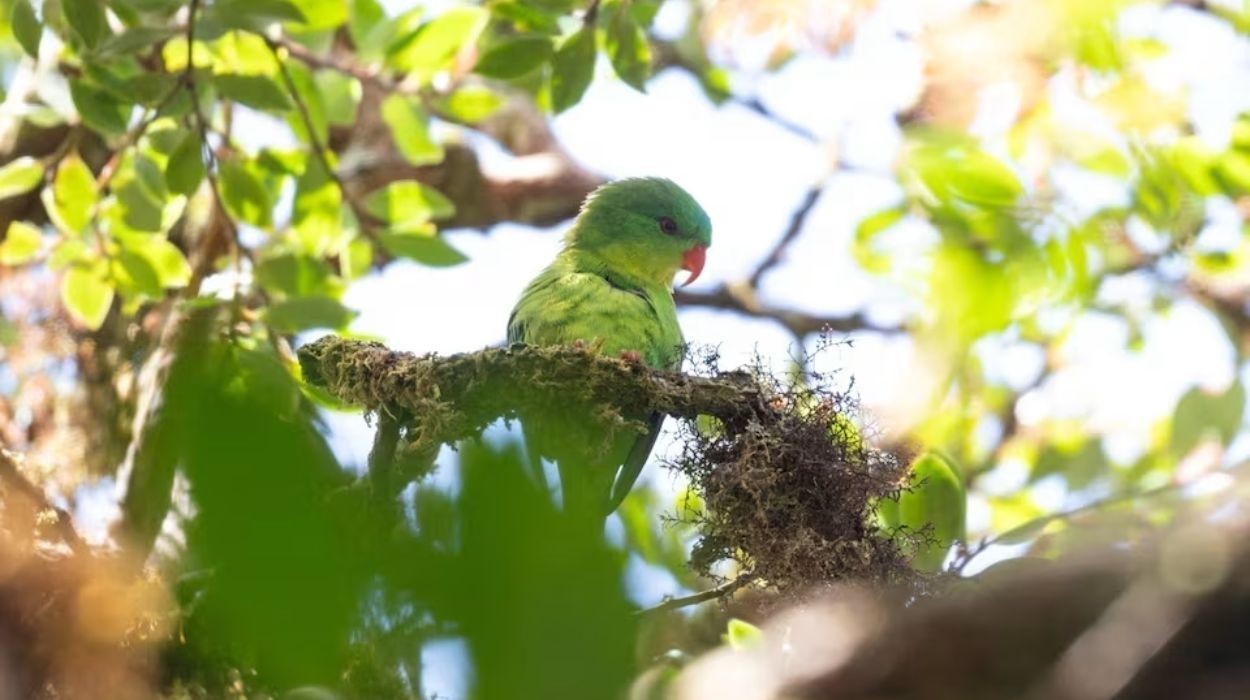
A rare bird species, the blue-crowned lorikeet (Charmosynopsis toxopei), has been sighted again in Indonesia's Buru island mountains, sparking renewed hope for its conservation. This elusive bird, endemic to the Moluccas archipelago, was previously known only from seven specimens collected in the 1920s and a single photograph from 2014. Researchers documented at least nine sightings during an expedition in April 2026 to the higher elevations of Mount Kapalatmada. For the first time, the team also recorded the species' calls in the wild and obtained new photographs. The lorikeet is considered one of the world's rarest birds and is listed internationally as a 'lost species' – species known to science but unrecorded for over a decade. The expedition team navigated challenging terrain, including limestone cliffs and dense vegetation, reaching remote cloud forests thanks to a recently mapped route by local mountaineers. Researchers, including John Mittermeier of the American Bird Conservancy's Search for Lost Birds program, theorized the species might inhabit unexplored high-altitude areas, a hypothesis now confirmed. Despite this rediscovery, much remains unknown about the blue-crowned lorikeet, including its population size, exact range, and primary threats. The IUCN currently classifies it as Data Deficient due to this lack of information. Experts warn that Buru Island's forests face threats from deforestation, hunting, and illegal bird capture, underscoring the urgent need for further research and conservation efforts.
The rediscovery of the blue-crowned lorikeet highlights the persistent biodiversity hidden within Earth's least accessible regions. This event underscores the critical role of exploration and technological advancement, such as improved mapping and audio recording, in identifying and understanding poorly documented species. The species' 'lost' status and subsequent reappearance emphasize the limitations of current conservation monitoring, particularly in challenging terrains. Future conservation strategies must balance the need for access and research with the imperative to protect fragile ecosystems from human pressures like deforestation and illegal trade. The situation also points to a broader challenge in conservation science: how to effectively allocate resources to species and habitats that are difficult to study but potentially vital for ecosystem health, especially as climate change and human activity continue to alter landscapes.
AI-generated to prompt reflection — not editorial opinion, not advice, not a statement of fact. How this works.