Rare 'Firestorm' Clouds in France Spark New Wildfires with Lightning
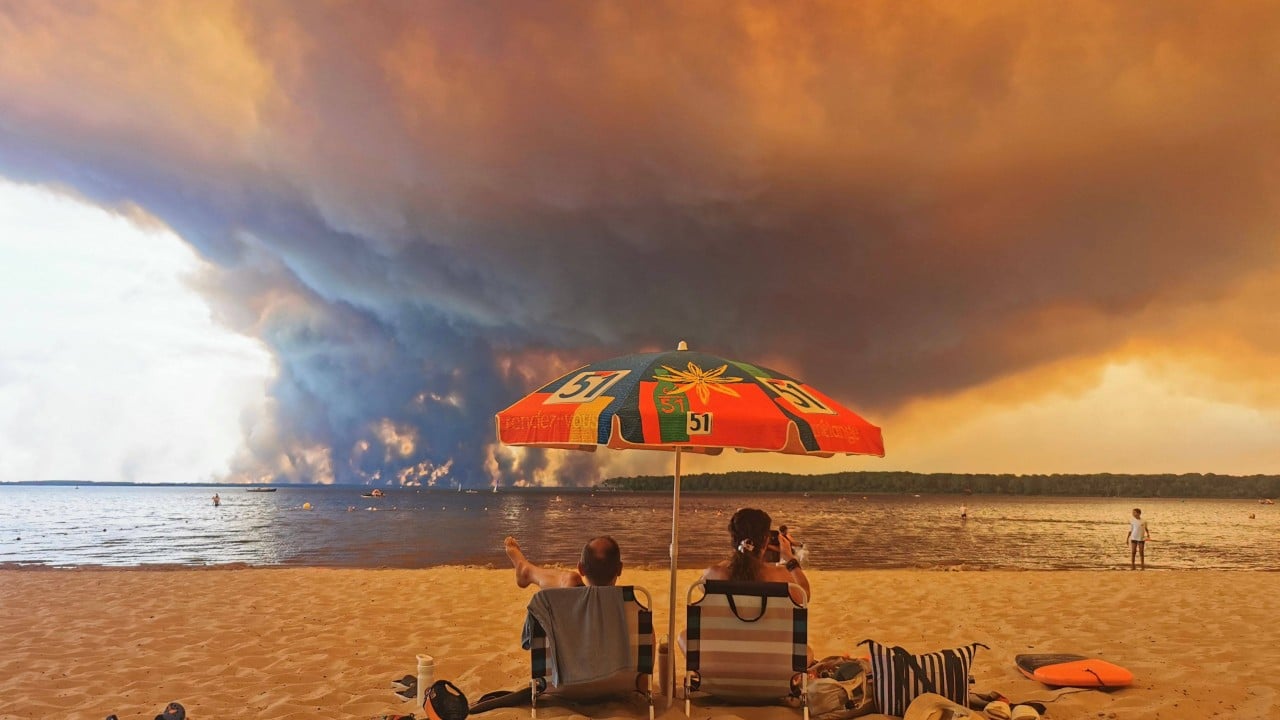
A powerful wildfire in southwest France generated a rare pyrocumulonimbus cloud, also known as a firestorm. This phenomenon occurred when the smoke column from the inferno rose so high that it became a thunderstorm. The resulting lightning struck the ground, igniting new fires beyond the original blaze. French officials confirmed that the fire was creating its own weather conditions, rather than being solely driven by external weather patterns. The thundercloud also produced strong, unpredictable winds that further propelled the flames in various directions. While pyrocumulonimbus events are uncommon in Europe, this incident highlights the extreme and self-sustaining nature that large wildfires can develop. The fire's ability to generate its own weather systems poses significant challenges for containment efforts.
The occurrence of a pyrocumulonimbus cloud in France underscores the escalating intensity and self-perpetuating dynamics of large-scale wildfires, particularly in the context of climate change. This event demonstrates a critical feedback loop where extreme heat and atmospheric instability, exacerbated by drought conditions, allow fires to generate their own weather systems, including lightning and erratic winds. Such phenomena move beyond conventional fire behavior modeling, presenting unprecedented challenges for firefighting strategies and resource allocation. Future wildfire management will need to incorporate more sophisticated predictive tools that account for these emergent atmospheric conditions, potentially requiring a shift towards proactive risk mitigation and adaptive response frameworks that acknowledge the increasing autonomy of fire behavior.
AI-generated to prompt reflection — not editorial opinion, not advice, not a statement of fact. How this works.