Rare Giant Armadillo Pair Photographed in Pantanal Protected Area
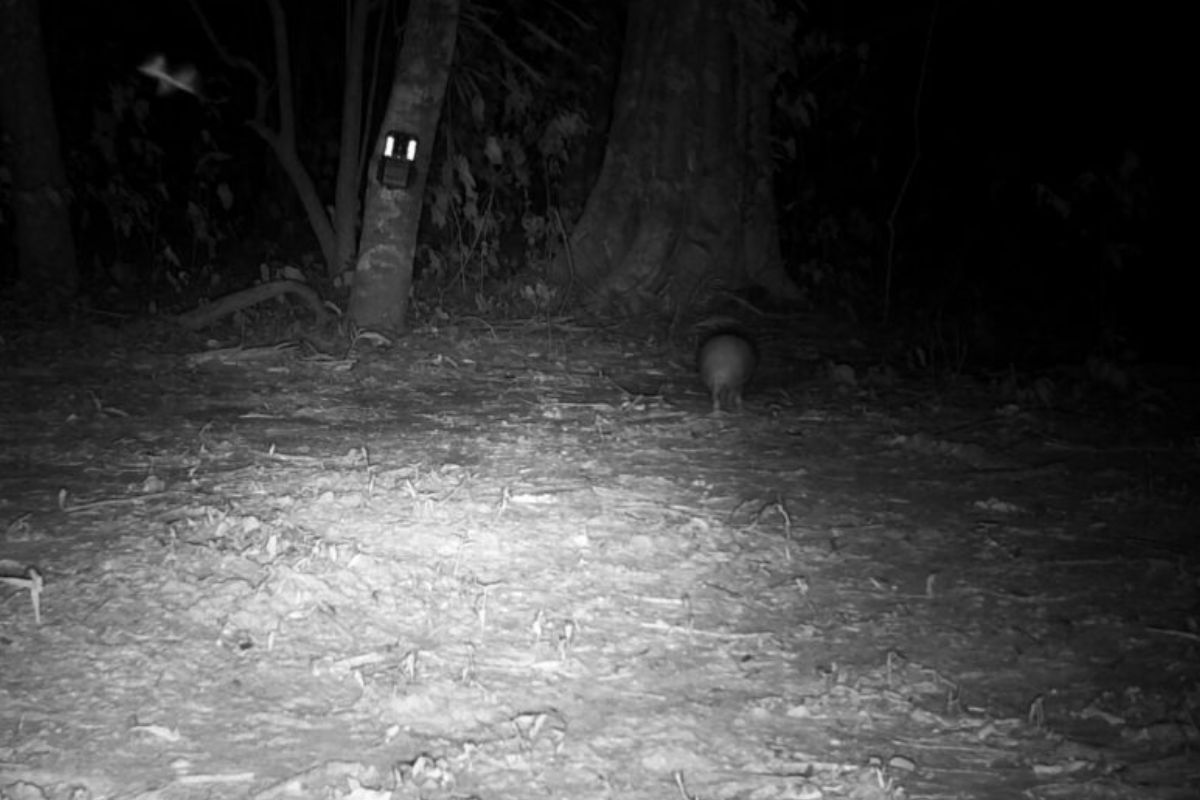
A rare breeding pair of giant armadillos (Tolypeutes matacus) has been documented by the Instituto Homem Pantaneiro (IHP) in the Serra do Amolar region of the Pantanal, a vital Brazilian wetland area. The images, released on Monday, August 28th, confirm the species' presence in a part of the Pantanal particularly susceptible to climate change and wildfires. This sighting is significant as it involves a pair of reproductive age, potentially offering valuable insights for new studies on the giant armadillo's behavior and reproduction, and bolstering conservation efforts. The IHP has been monitoring fauna and flora in the Serra do Amolar for over a decade, recording more than 200 animal species, including 10 classified as vulnerable or endangered. The giant armadillo, currently listed as 'near threatened' by Brazil's Ministry of Environment and Climate Change, is undergoing re-evaluation that might increase its threat level. Limited confirmed records and poorly understood distribution in Brazil, according to the Instituto Chico Mendes de Conservação da Biodiversidade (ICMBio), highlight the importance of this discovery. The species is also found in Bolivia, Paraguay, and Argentina, but its Brazilian range is primarily confined to the Pantanal, specifically southwestern Mato Grosso and western Mato Grosso do Sul. Habitat loss due to agricultural expansion is the primary threat, alongside illegal capture for consumption, pet trade, and export. The giant armadillo, weighing about 1.3 kg and measuring up to 25 cm, is the smallest armadillo in the Pantanal and is known for its unique ability to roll into a complete ball for defense.
The documentation of a rare breeding pair of giant armadillos in a vulnerable Pantanal region underscores the critical role of protected areas and ongoing monitoring programs in understanding and safeguarding biodiversity. The species' 'near threatened' status, coupled with limited distribution data and significant threats from habitat loss and illegal capture, highlights the delicate balance between ecological preservation and human activities like agriculture. Future conservation strategies will likely need to integrate landscape-level planning that accounts for climate change impacts and addresses the socio-economic drivers of habitat encroachment and illegal wildlife trade. Continued scientific observation, as exemplified by the IHP's work, is essential for adaptive management and ensuring the long-term viability of species like the giant armadillo in the face of evolving environmental pressures.
AI-generated to prompt reflection — not editorial opinion, not advice, not a statement of fact. How this works.