Rare Iron Shackles Unearthed in France Reveal 2,300-Year-Old Celtic Slave Trade
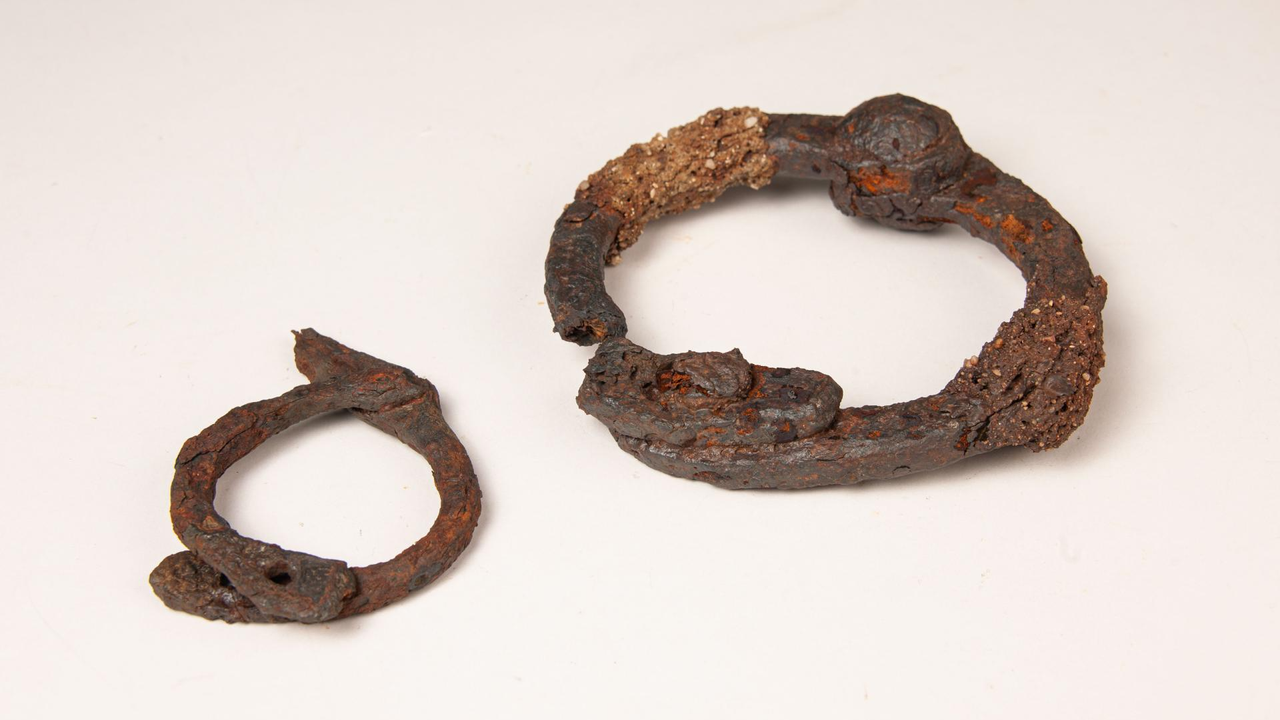
Archaeologists in France have uncovered five "extremely rare" iron shackles, providing compelling evidence of the Celtic slave trade dating back approximately 2,300 years. The discovery was made at a pre-Roman settlement, surprising researchers with its implications for understanding ancient societal structures. These shackles offer a tangible link to a period where human bondage was a recognized practice among Celtic societies. The find suggests that the slave trade was more prevalent and organized than previously understood for this era. Further analysis of the shackles and their context is expected to shed more light on the lives of enslaved individuals and the economic systems that supported this practice. The discovery underscores the importance of archaeological research in revealing often-overlooked aspects of human history. It challenges existing narratives and prompts a deeper examination of the social dynamics of Iron Age Europe. The rarity of such artifacts makes this finding particularly significant for historical scholarship.
The discovery of these ancient iron shackles in France offers a stark archaeological insight into the historical reality of the slave trade within Celtic societies approximately 2,300 years ago. This find necessitates a re-evaluation of the scale and nature of bondage during the pre-Roman period in Europe, moving beyond theoretical understanding to tangible evidence. It prompts consideration of the economic and social incentives that sustained such practices and the governance structures, or lack thereof, that permitted them. Looking ahead, this discovery serves as a reminder of the long arc of human history and the evolving ethical frameworks that societies develop. It encourages reflection on how historical injustices, even those from millennia ago, shape our present understanding of human rights and societal progress.
AI-generated to prompt reflection — not editorial opinion, not advice, not a statement of fact. How this works.