Rare Leucistic Tayra Documented in Rio de Janeiro's Itatiaia National Park Surroundings
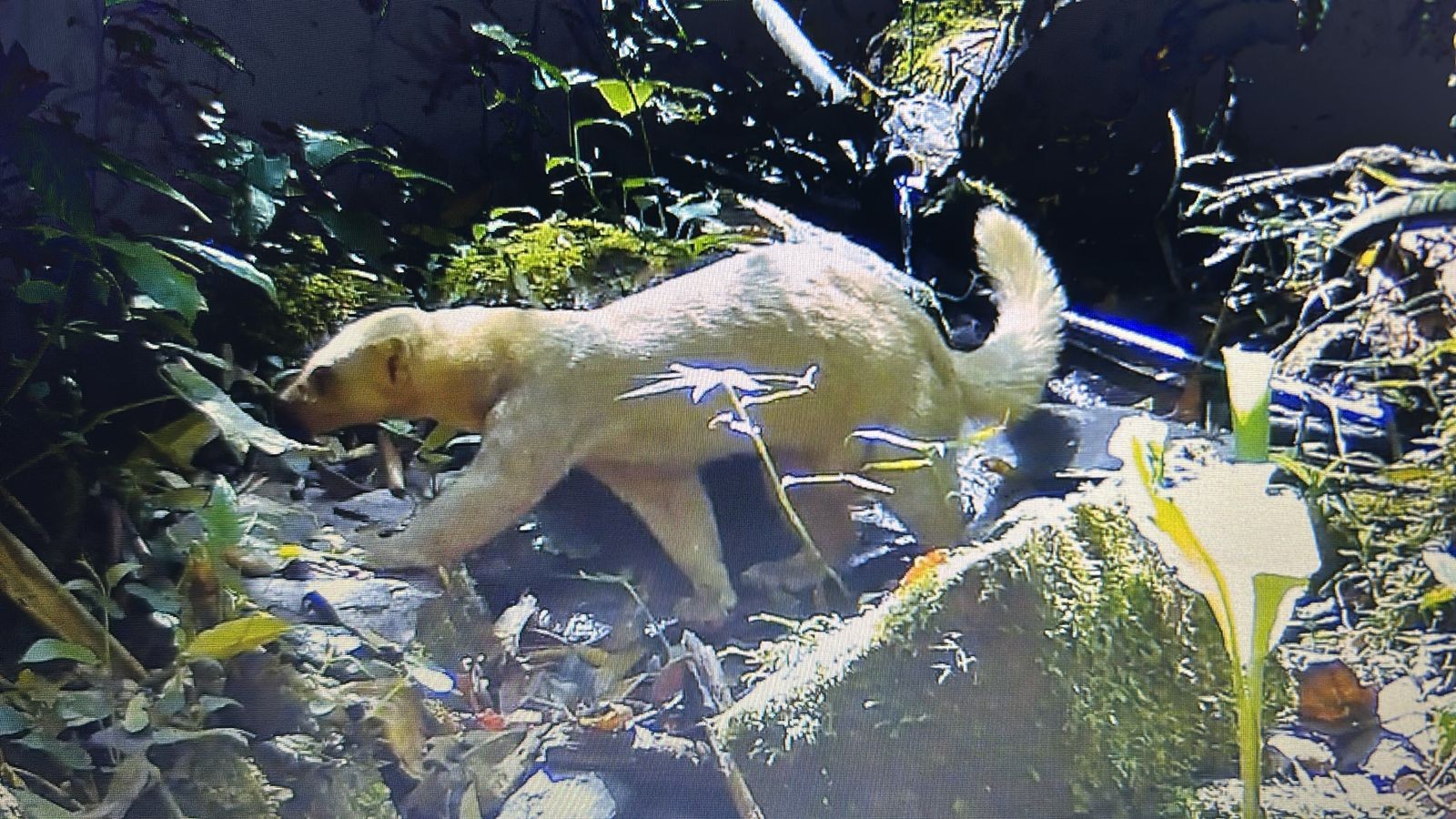
Researchers monitoring wildlife near Itatiaia National Park in Resende, Rio de Janeiro, have documented a rare genetic mutation in a tayra (Eira barbara). The animal exhibits leucism, a condition causing partial loss of pigmentation in its skin and fur. This marks only the second known instance of a leucistic tayra in Rio de Janeiro state, with the first recorded in Visconde de Mauá. Photographic traps captured the tayra multiple times over several months, allowing researchers to observe its movements and behavior. Unlike the previous sighting, this individual appears to favor forest edge habitats, a strategy researchers hypothesize may reduce predation risk and aid hunting in brighter conditions, though further study is needed to confirm this. The monitoring program, Carnívoros do Rio, has recorded 554 fauna instances, including endangered species like the puma and the small-eared cat, as well as native brocket deer and the invasive wild boar. The program emphasizes the crucial role of private properties in biodiversity conservation, acting as vital ecological corridors between Atlantic Forest remnants. The presence of the invasive wild boar, however, remains a concern due to its threat to native fauna, conflicts with farmers, and potential disease transmission. The Carnívoros do Rio program, funded by Tigercats Conservation and Bigcat Rescue, employs a participatory approach, involving local producers and residents to bridge traditional research methods with the needs of the surrounding environment. This collaborative model aims to develop solutions beneficial to both wildlife and local communities, including vaccination efforts against zoonoses in partnership with institutions like UFRRJ's LEIPH laboratory.
The documentation of a leucistic tayra highlights the ongoing value of dedicated wildlife monitoring programs, particularly those extending beyond protected areas into surrounding private lands. Such initiatives are crucial for understanding species distribution, genetic diversity, and the impact of environmental factors like habitat fragmentation. The participatory approach adopted by the Carnívoros do Rio program, integrating local communities and private landowners, represents a forward-thinking model for conservation. This collaborative framework not only enhances data collection but also fosters local stewardship, which is essential for long-term ecological success. Furthermore, the program's attention to invasive species like the wild boar and its efforts to mitigate disease transmission through a 'One Health' approach underscore the complex, interconnected challenges facing biodiversity in the Anthropocene. Addressing these systemic issues requires sustained, multi-stakeholder engagement and adaptive management strategies that account for both ecological and human dimensions.
AI-generated to prompt reflection — not editorial opinion, not advice, not a statement of fact. How this works.