Rare Mirage Phenomenon in Cornwall Sparks Online Speculation
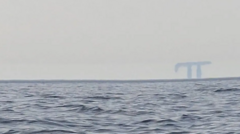
A rare mirage phenomenon observed on the coast of Cornwall in southwestern England has generated considerable speculation across social media platforms. The image capturing this unusual event has prompted questions about its precise nature and the science behind it. Mirages, often referred to as 'Fata Morgana,' are complex optical illusions that occur when light rays bend due to atmospheric temperature gradients. Typically, they are seen over large bodies of water or deserts, making their appearance on a coastline a noteworthy occurrence. The specific conditions required for such a mirage to form involve layers of air with significantly different temperatures, causing light to refract in a way that distorts distant objects. This particular sighting in Cornwall has captivated online communities, with many sharing and discussing the striking visual. The event serves as a reminder of the fascinating atmospheric optics that can occur, often leading to public curiosity and wonder. Further details regarding the exact atmospheric conditions on the day of the sighting are likely to be of interest to meteorologists and optical physicists.
The public's fascination with the Fata Morgana mirage in Cornwall highlights a natural human curiosity about optical phenomena that challenge perception. Such events, while scientifically explainable through atmospheric refraction, can evoke wonder and sometimes confusion, leading to online discussion and speculation. From a systems perspective, the rapid dissemination of images and theories via social media demonstrates the power of digital platforms in shaping public understanding of scientific events, for better or worse. This instance underscores the importance of clear, accessible scientific communication to contextualize unusual natural occurrences and prevent misinformation, especially as climate shifts may alter the frequency or intensity of such atmospheric events in the future.
AI-generated to prompt reflection — not editorial opinion, not advice, not a statement of fact. How this works.