Rare Roman Military Camp in Slovakia Reveals Soldiers Buried Hastily During Marcomannic Wars
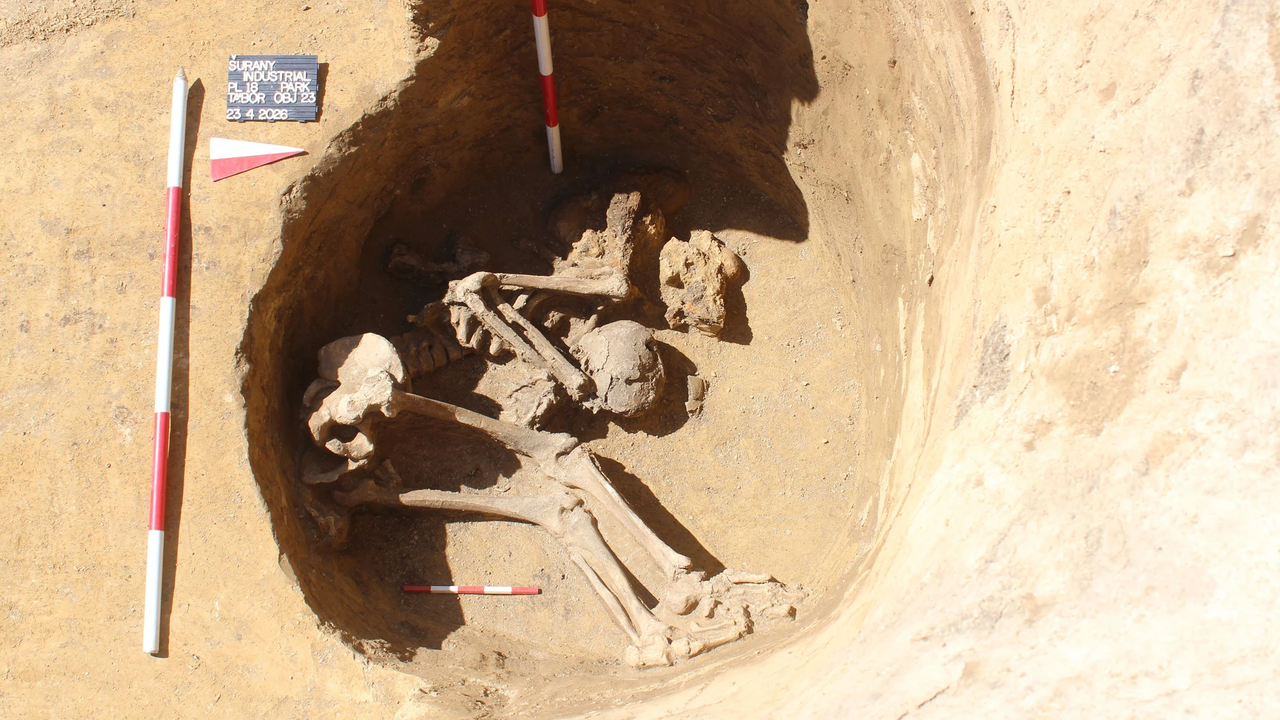
Archaeologists in Slovakia have unearthed an exceptionally rare Roman military camp, believed to date back to the Marcomannic Wars fought under Emperor Marcus Aurelius. The site contains unusual burial practices, with the remains of soldiers discovered in a manner suggesting haste and potentially disrespect. Some soldiers were found buried in wells, a practice not typically associated with Roman military burials. This discovery offers significant insights into the Roman military presence in the region and the conditions faced by soldiers during these protracted conflicts. The Marcomannic Wars, which took place from roughly 166 to 180 AD, involved extensive campaigns along the Danube frontier. The nature of these burials may reflect the chaotic and intense circumstances of the battles fought. Further analysis of the skeletal remains and the camp's layout is expected to provide more detailed information about the soldiers and their experiences. This finding is considered highly significant due to the rarity of such well-preserved Roman military sites in Slovakia. The excavation is ongoing, with researchers hoping to uncover more about the Roman army's activities and interactions with local populations during this turbulent period.
The discovery of this Roman military camp and its unusual burial sites offers a unique window into the logistical and human challenges of imperial expansion and frontier defense. The hasty burials, including those in wells, suggest that the pressures of conflict under Marcus Aurelius may have overwhelmed standard Roman military protocols for honoring the fallen. This could reflect either extreme battlefield conditions or a potential breakdown in discipline or resources during the Marcomannic Wars. Examining these practices through the lens of systemic military logistics and resource allocation, rather than individual actions, can illuminate how Roman military governance adapted, or failed to adapt, to prolonged, high-intensity warfare on distant frontiers. The long-term implications for understanding Roman military strategy and the human cost of empire are substantial, prompting reflection on how future military engagements might similarly strain established norms under duress.
AI-generated to prompt reflection — not editorial opinion, not advice, not a statement of fact. How this works.