Rare Sand Tiger Sharks Use São Paulo Coastline for Critical Breeding Activities
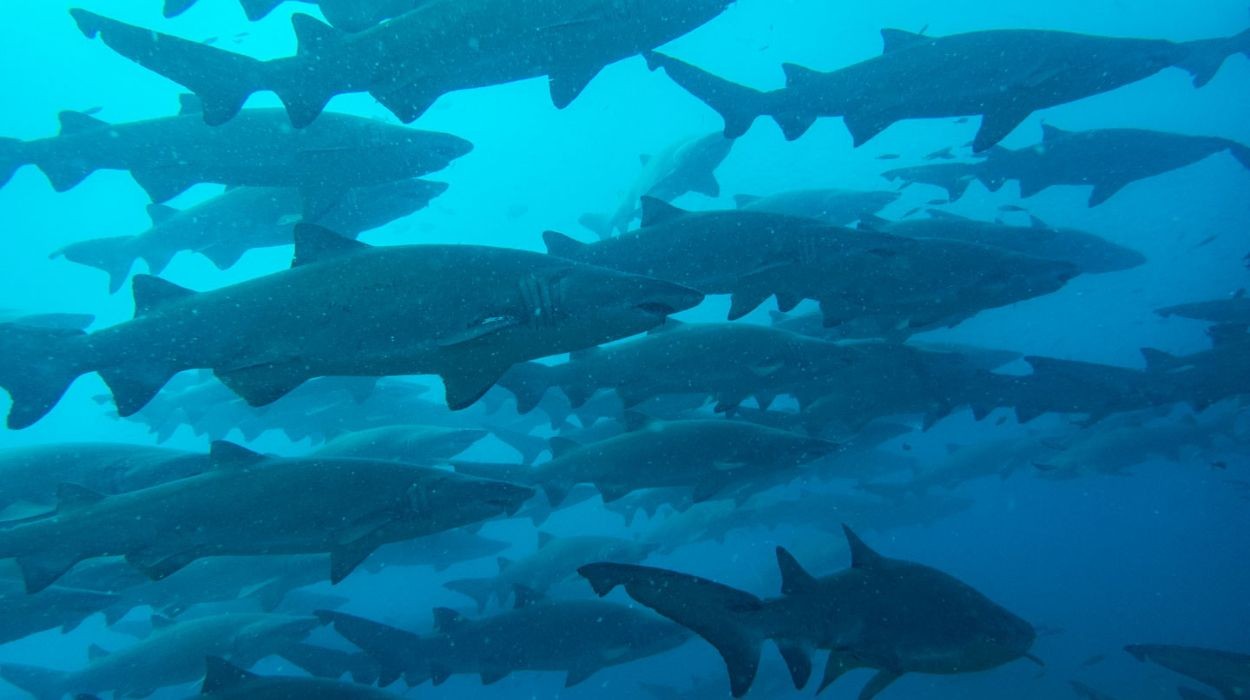
The Alcatrazes Archipelago Wildlife Refuge, located off the northern coast of São Paulo, Brazil, has been identified as a crucial breeding ground for the critically endangered sand tiger shark (Carcharias taurus). A recent study by the Marine Ecology and Conservation Laboratory of the Federal University of São Paulo (Labecmar-Unifesp) documented adult males, females exhibiting mating marks, and a pregnant female within this protected area. This discovery highlights the refuge's importance for vital stages of the species' life cycle. Researchers employed remote underwater bait-unit (BRUV) stereovideography, a technique using synchronized cameras and bait to film aquatic animals in their natural habitat without disturbance. Data was collected across four summers and four winters between 2022 and 2025. The study, supported by Petrobras and FAPESP, also incorporated citizen science data. Observations included aggregations of up to ten sand tiger sharks, with a pregnant female observed during winter and a female with recent mating scars documented in summer. Sand tiger sharks have an estimated gestation period of nine to 12 months and reproduce biennially, producing very few offspring, often with a unique form of intrauterine cannibalism where more developed fetuses consume their less developed siblings. These sharks, which can reach up to three meters in length, inhabit subtropical and temperate waters globally and are found along Brazil's southern and southeastern coasts. They face threats from habitat loss, pollution, climate change, and bycatch. The limited knowledge of their biology in Brazil underscores the significance of this research for conservation efforts.
This study provides critical data on the reproductive behavior of the critically endangered sand tiger shark, identifying a vital breeding sanctuary along the São Paulo coast. The confirmation of breeding activities within a protected area underscores the effectiveness of such conservation zones for species recovery. However, the species' low fecundity and unique intrauterine cannibalism present significant biological challenges to population growth, making them particularly vulnerable to external threats like habitat degradation and bycatch. Future conservation strategies must address these inherent biological limitations alongside mitigating human-induced pressures, recognizing that the long-term survival of this species depends on robust, multi-faceted protection and a deeper understanding of its ecological role and vulnerabilities in a changing marine environment.
AI-generated to prompt reflection — not editorial opinion, not advice, not a statement of fact. How this works.