Rare Sighting: Southern Right Whale Nursing Calf Off São Paulo Coast
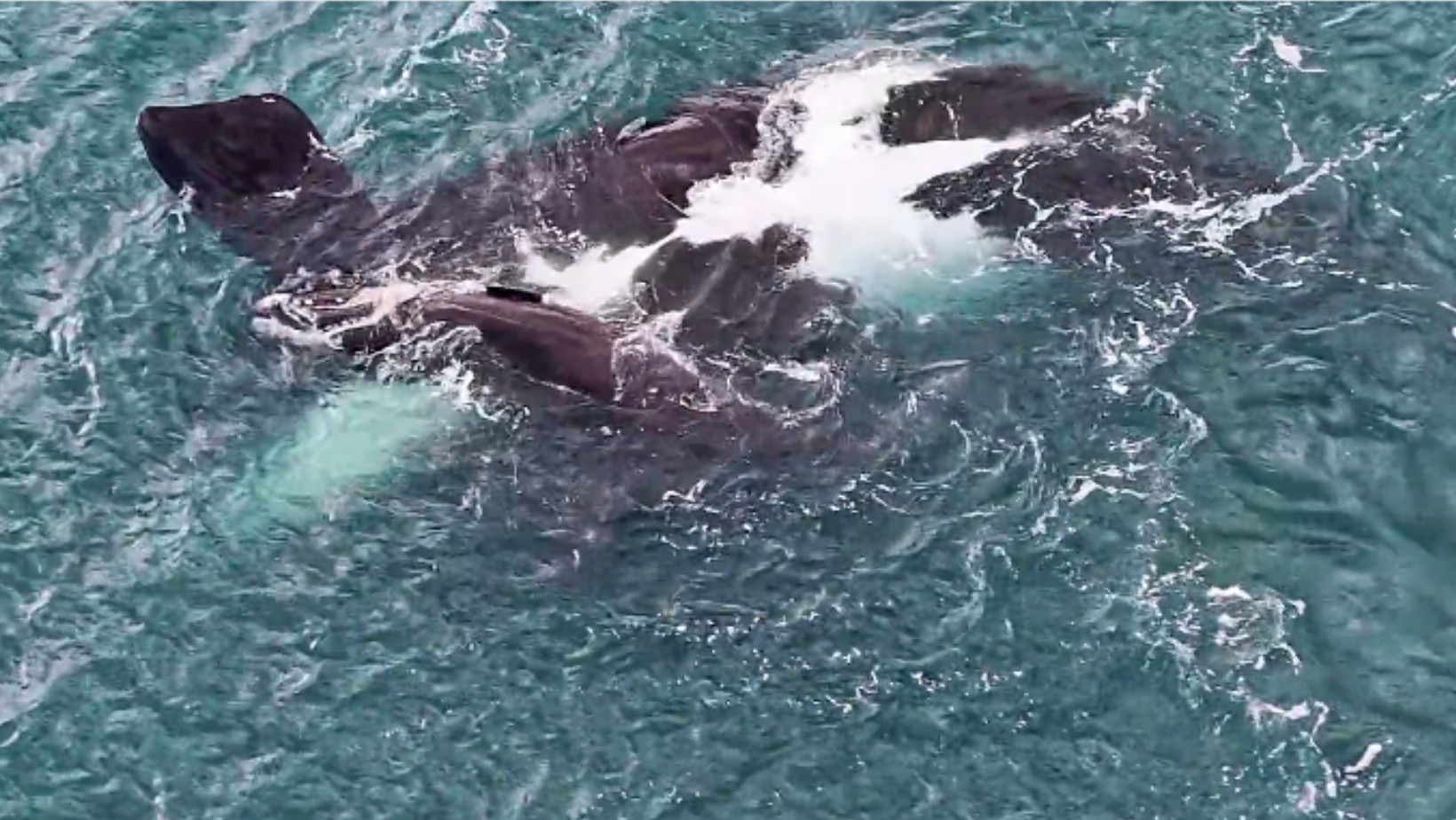
A rare sighting of a southern right whale nursing its calf occurred off the coast of Ilhabela, in São Paulo's Northern Shore, on Wednesday morning, October 15th. This species, one of the largest marine mammals along the Brazilian coast and capable of reaching 18 meters in length, is infrequently observed in this region. The encounter was documented in the Ilhabela Channel around 10 AM by Marcos Cará, a tourism entrepreneur and whale observer. Biologist Carla Beatriz Barbosa, executive director of the Argonauta Institute, explained that southern right whales are more commonly found further south, particularly near Santa Catarina, for breeding and nursing. However, she noted that some individuals may travel further north due to currents or longer displacements. Since 2020, only 25 sightings of southern right whales have been recorded on the São Paulo coast, with 16 of those involving mothers and calves. While less common than humpback whale sightings, the winter season typically sees migratory activity for these animals. Researchers can identify individual whales by the unique patterns of barnacles attached to their skin, a method distinct from identifying humpback whales by their tails. Authorities advise the public and boaters to maintain distance, avoid noise, reduce speed, refrain from surrounding the animals, and not interfere with their movement when encountering whales.
The rare sighting of a southern right whale and its calf off the coast of São Paulo highlights the dynamic migratory patterns of marine life and the importance of citizen science in documenting these events. While the presence of these whales in this region is uncommon, it underscores the interconnectedness of marine ecosystems and the potential for species to adapt or shift their traditional ranges. Continued monitoring and adherence to responsible wildlife observation guidelines are crucial for the conservation of these vulnerable populations. Understanding the factors influencing these shifts, such as ocean currents and climate variability, will be increasingly important for predicting future distributions and ensuring effective conservation strategies in the coming decade.
AI-generated to prompt reflection — not editorial opinion, not advice, not a statement of fact. How this works.