Rare Slave Shackles Found at Ancient Gaulish Settlement
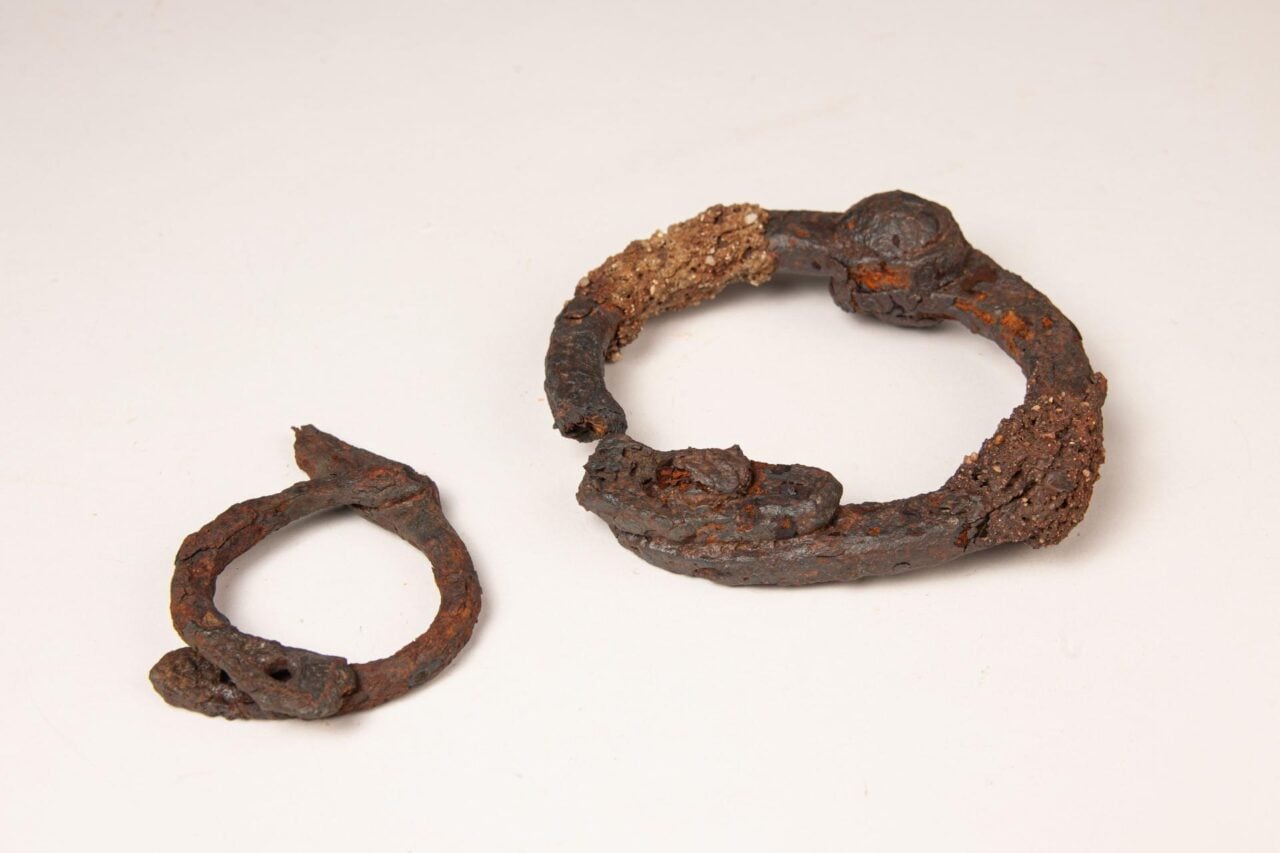
Archaeologists have unearthed a significant find at an ancient Gaulish settlement: rare slave shackles. The discovery provides crucial insights into the history of this settlement, which is situated in a strategically important location. Researchers believe the site was likely a hub for both metalsmiths and individuals involved in the slave trade. The presence of these shackles offers tangible evidence of the enslavement practices that occurred in this region during ancient times. This finding contributes to a deeper understanding of the social and economic structures of Gaulish society. Further analysis of the shackles and the surrounding settlement may reveal more details about the lives of those who were enslaved and the broader context of the slave trade in the ancient world. The location's significance suggests it played a role in regional commerce and potentially conflict. The artifacts are expected to inform future research on Celtic and Roman interactions.
The discovery of slave shackles at this Gaulish settlement highlights the historical prevalence of human bondage as an economic and social institution across ancient Europe. This finding underscores the complex and often brutal realities of pre-Roman societies, where trade and resource extraction were deeply intertwined with the exploitation of human labor. Examining the context of this settlement, particularly its potential role as a nexus for metalsmiths and slave traders, prompts consideration of the incentive structures that fueled such practices. Future research could explore how the demand for labor in craft production and other sectors may have driven the expansion of the slave trade, and how this system interacted with broader geopolitical dynamics in the region. Understanding these historical systems of exploitation is crucial for appreciating the long-term evolution of labor relations and societal structures.
AI-generated to prompt reflection — not editorial opinion, not advice, not a statement of fact. How this works.