Rare Southern Right Whale and Calf Spotted 'Dancing' Off Rio de Janeiro
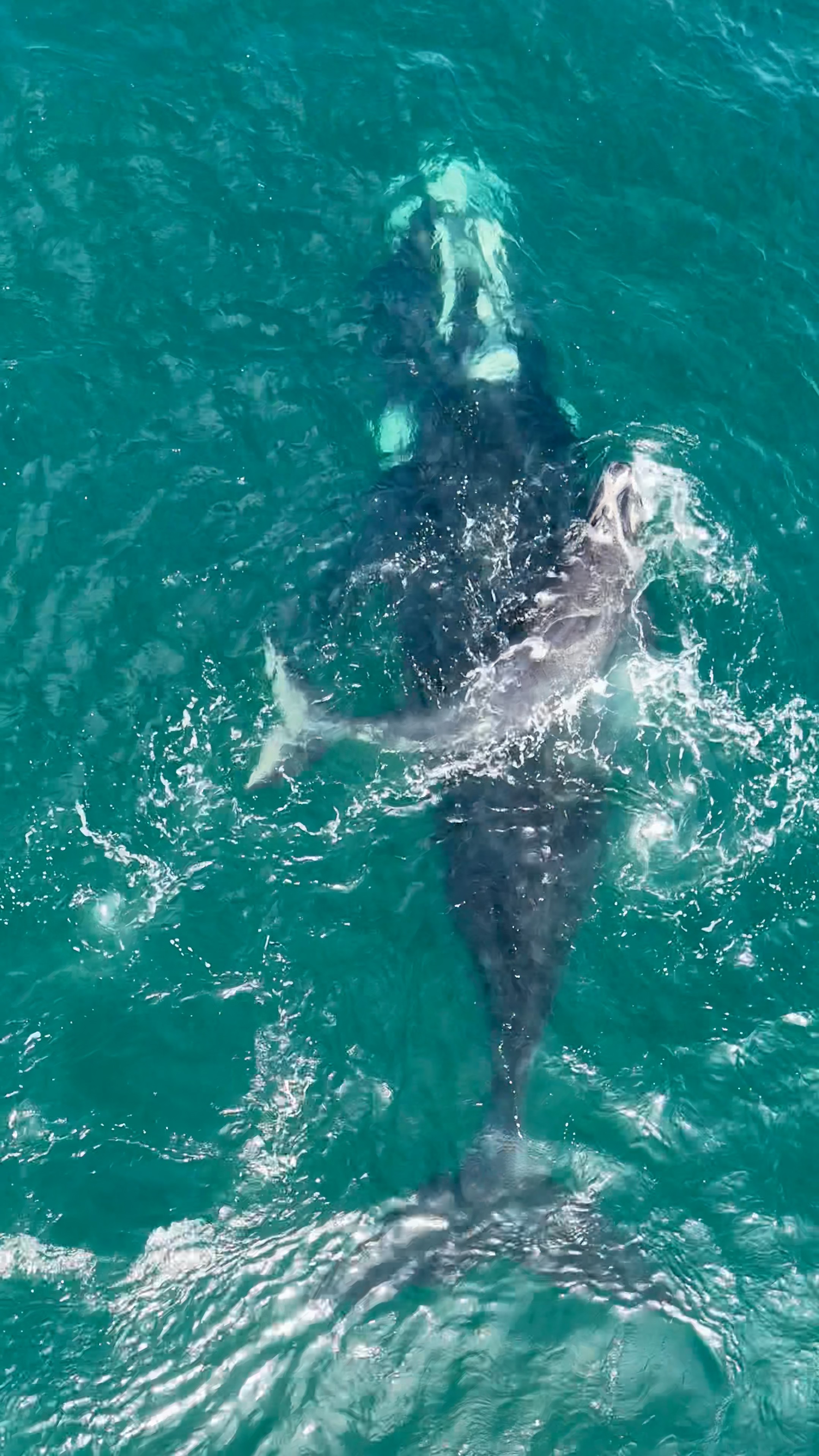
Photographer Gabriel Klabin captured a rare sighting of a Southern Right Whale and its calf near Arpoador beach in Rio de Janeiro on Tuesday, May 4th. The video shows the pair swimming together in a way that appears like a dance, though Klabin explained the calf was resting on its mother for protection, a behavior crucial for survival. The Southern Right Whale (Eubalaena australis) is classified as 'Endangered' in Brazil due to historical commercial whaling, and is still in a recovery process. These whales typically migrate to the Brazilian coast for reproduction during winter and spring, with Santa Catarina being their main concentration area, making sightings in Rio de Janeiro unusual. The article also contrasts this with the more common annual migration of Humpback whales along the Rio de Janeiro coast. Humpback whales undertake a journey of up to 9,000 kilometers from the Antarctic to warmer waters like Abrolhos, Bahia, for mating and calving. Rio's coastline serves as a vital migratory corridor for these 40-ton giants, offering frequent opportunities for whale-watching tourism. Unlike Southern Right Whales, Humpback whales migrate to warmer regions not primarily for food, but for reproduction, with their calves born and spending early months in these tropical waters before returning to the Antarctic. The increasing presence of whales along the Brazilian coast, particularly Humpbacks, is highlighted as a success story for marine conservation efforts following the 1980s ban on commercial whaling, with over 30,000 Humpbacks now estimated to cross the Brazilian coast annually. Despite scientific advancements, the precise navigation methods whales use to follow the same migratory paths year after year remain a mystery, with hypotheses including ocean currents, Earth's magnetic field, or celestial positioning.
The sighting of a rare Southern Right Whale and calf in Rio de Janeiro, contrasted with the common Humpback whale migration, underscores the complex ecological dynamics and conservation successes in Brazilian waters. While Humpback whale populations have shown significant recovery, the endangered status of the Southern Right Whale highlights ongoing conservation challenges. The article implicitly raises questions about habitat suitability and the impact of climate change on migratory routes and breeding grounds. The mystery of whale navigation, while fascinating, points to the vast unknowns in marine biology and the need for continued research to understand and protect these species in an era of increasing anthropogenic pressures on ocean ecosystems. Future conservation strategies may need to consider the specific vulnerabilities of different whale species and adapt to shifting environmental conditions.
AI-generated to prompt reflection — not editorial opinion, not advice, not a statement of fact. How this works.
