Rare 'Space Clouds' Offer Stunning Summer Skywatching Spectacle
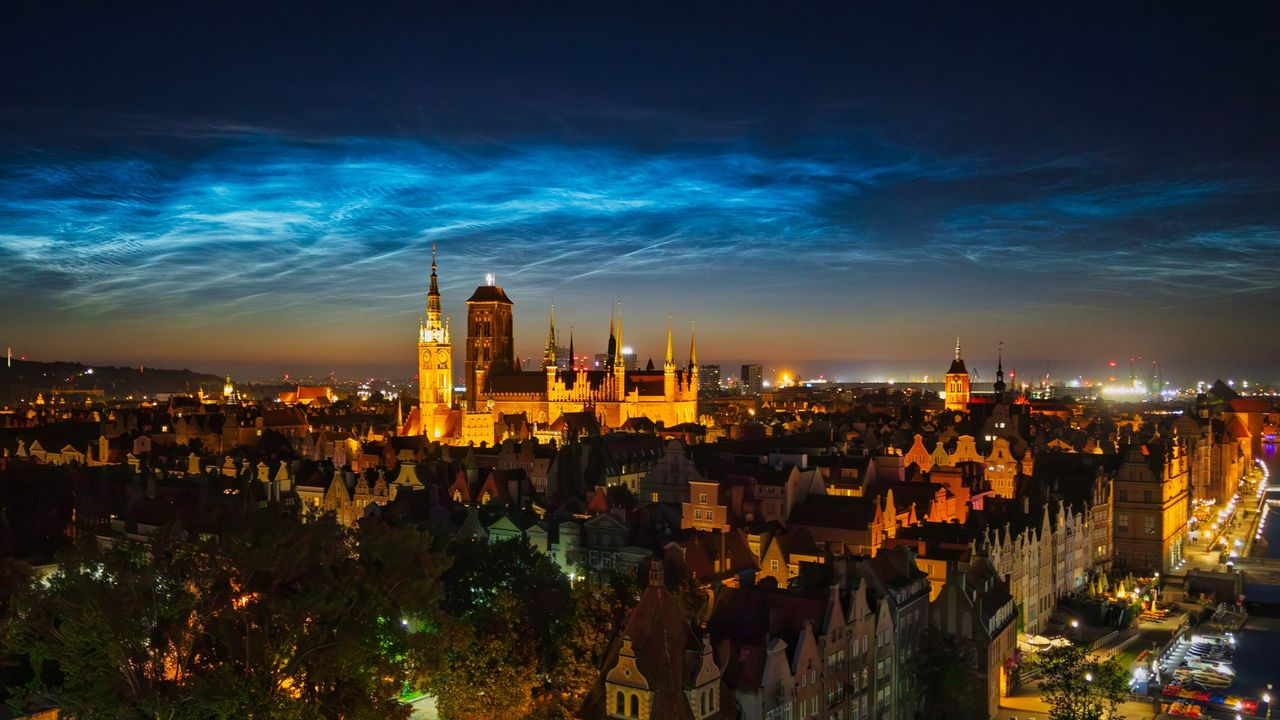
Late June and early July present a prime opportunity for skywatchers to observe noctilucent clouds, a phenomenon often referred to as 'space clouds.' These clouds are composed of ice crystals and are situated at the very edge of space, approximately 50 miles above Earth's surface. Their unique composition allows them to reflect sunlight even after sunset, creating a mesmerizing, shimmering glow in the twilight sky. This ethereal display is most visible during the summer months in the Northern Hemisphere. To catch a glimpse, observers should look towards the northern horizon shortly after sunset or before sunrise. The best viewing conditions typically occur when the sun is just below the horizon, illuminating these high-altitude clouds. Noctilucent clouds are the highest clouds in Earth's atmosphere, and their appearance is thought to be linked to climate change, with some studies suggesting an increase in their frequency and brightness. Their delicate, electric-blue appearance makes them a truly remarkable, yet often overlooked, celestial event.
The emergence of noctilucent clouds as a notable skywatching event highlights the interplay between atmospheric conditions and public interest in celestial phenomena. While these clouds are a natural occurrence, their increasing visibility and association with summer skywatching present an opportunity to educate the public about atmospheric science and potential climate indicators. Understanding the factors influencing their formation, such as water vapor and dust particles at extreme altitudes, can foster greater scientific literacy. The phenomenon also underscores how readily accessible natural spectacles can capture public imagination, offering a low-barrier entry point for engagement with astronomy and Earth science, potentially inspiring future scientific inquiry.
AI-generated to prompt reflection — not editorial opinion, not advice, not a statement of fact. How this works.