Rare US Declaration of Independence print discovered in UK archive
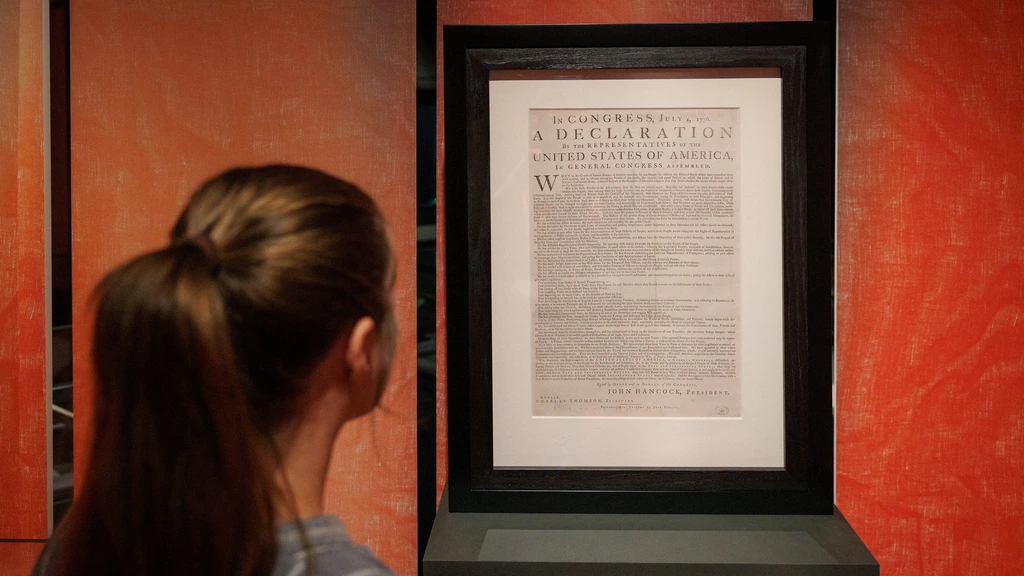
A rare printed copy of the U.S. Declaration of Independence, originally produced in Exeter, New Hampshire, has been found in British national archives. This marks the first time such a document has been discovered outside of the United States. Of the Exeter version, only eleven copies were previously known to exist. These documents were printed between July 16 and 19, 1776, to rapidly disseminate news of the Declaration's approval on July 4th across the thirteen original British colonies. The discovery was made in May by a volunteer at the archives in London while examining records of a British captain's capture of the American privateer ship Dalton. The document was found as an appendix within the captain's report, seemingly overlooked and labeled as 'another document.' This particular copy is especially significant as it is the only known example seized during military action. The Dalton was captured by the British navy on Christmas Eve 1776 off the coast of Portugal after an extended pursuit. Its crew was taken to Plymouth, England, and imprisoned. British captains were required to present captured documents to claim rewards for seized vessels. During the American Revolutionary War, the British captured approximately 3,600 ships. American historians have reacted with enthusiasm, viewing the find as a direct link to the captain of the Dalton and a tangible connection to 1776. The copy will be exhibited in London in anticipation of the U.S. Bicentennial celebrations.
The discovery of this Declaration of Independence copy highlights the complex information dissemination strategies and the unintended archival consequences of military conflict during the American Revolution. The document's journey from a New Hampshire print shop to a British archive, via a captured vessel, underscores the interconnectedness of the colonial and imperial systems. Future analysis could explore how such artifacts, once instruments of political declaration and military spoils, now serve as critical historical evidence. Examining the provenance and chain of custody for such items can illuminate the administrative processes and legal frameworks governing prize captures and archival practices in the late 18th century, providing insights into the early development of both American nationhood and British imperial record-keeping.
AI-generated to prompt reflection — not editorial opinion, not advice, not a statement of fact. How this works.