Rattín, Footballer Who Inspired Red and Yellow Cards, Dies at 84
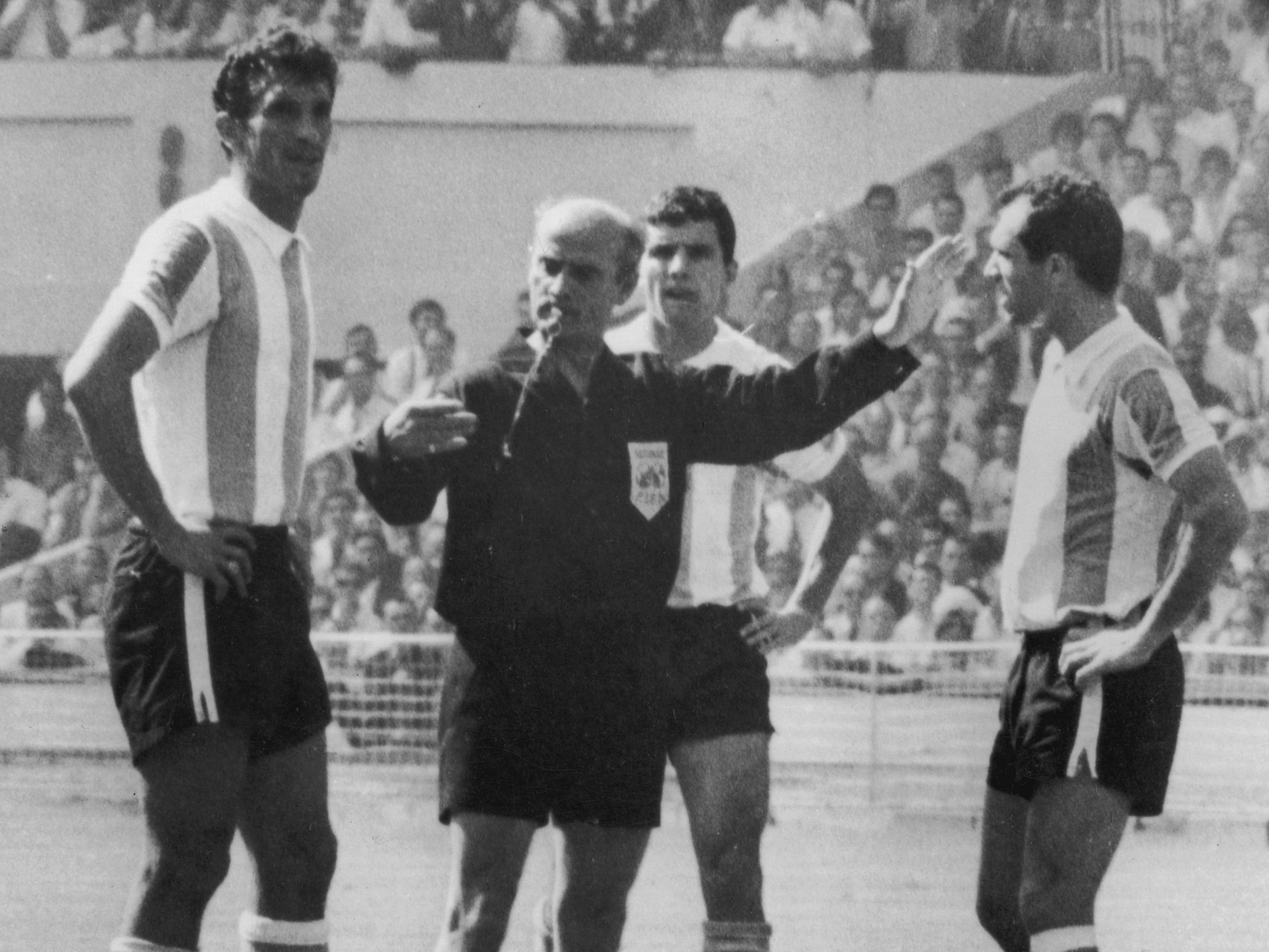
Antonio "El Flaco" Rattín, the Argentine footballer whose expulsion from a 1966 World Cup match against England famously inspired the introduction of red and yellow cards, has died at the age of 84. Rattín, a defensive midfielder who captained Argentina in that tournament, was sent off by German referee Rudolf Kreitlein in the quarter-final match. Rattín claimed he did not understand the referee's gestures and delayed his departure from the field. This incident highlighted the need for clearer communication in international football. Following the 1966 World Cup, FIFA introduced the color-coded cards, which were first used in the 1970 World Cup. Rattín played his entire club career for Boca Juniors, winning numerous titles, and represented Argentina in three World Cups. He was known for his leadership and tactical intelligence on the field.
The 1966 World Cup incident involving Antonio Rattín and the subsequent introduction of red and yellow cards represent a significant evolution in football's regulatory framework. This development addressed a systemic need for clearer, universally understood disciplinary signals, mitigating potential misunderstandings and enhancing the referee's authority. The event underscores how specific high-profile instances can catalyze broader institutional reforms, impacting global sports governance. Looking ahead, the ongoing integration of technology in officiating, such as VAR, continues this trajectory of refining clarity and fairness within the sport, though it introduces new complexities regarding implementation and interpretation.
AI-generated to prompt reflection — not editorial opinion, not advice, not a statement of fact. How this works.